
War in the Middle East

Some wars end with an agreement, a defeat or simple exhaustion. Others have no visible exit.
John Mearsheimer, the University of Chicago political scientist who has spent decades studying how great powers make strategic mistakes they cannot undo, argues that the conflict with Iran belongs to the latter category.
Speaking with Glenn Diesen on March 10, Mearsheimer was blunt: according to a transcript published by ScheerPost, no one in Washington can articulate a plausible story of how this war ends. For energy markets, that statement is not rhetorical — it is a pricing variable.
Brent crude settled around $112 per barrel on March 19, with an intraday high of $119 — more than $42 above its level a year earlier, according to data from Investing.com. The jump is not explained solely by the effective closure of the Strait of Hormuz, through which roughly 20% of globally traded oil and liquefied natural gas flows. At a deeper level, it reflects the absence of a verifiable end condition to the war.
Put simply, markets do not know when this ends. And according to Mearsheimer, that uncertainty is not a lack of information — it is the nature of the conflict itself.
The argument Washington does not want to hear
Within the academic tradition of offensive realism in international relations, Mearsheimer is one of the voices the Anglo-American debate finds hardest to ignore. His diagnosis of the war with Iran, developed across three public appearances between March 10 and 16 — with Diesen, journalist Chris Hedges and commentator Tom Switzer — has three components.
First, the United States entered the war believing it could achieve a quick victory through decapitation strikes and the destruction of nuclear facilities. Second, Iran demonstrated sufficient asymmetric response capacity to turn the conflict into a war of attrition. Third — and most relevant for markets — there is no visible political exit because the objectives of Israel and the United States are incompatible with each other, and both are unacceptable to Tehran.
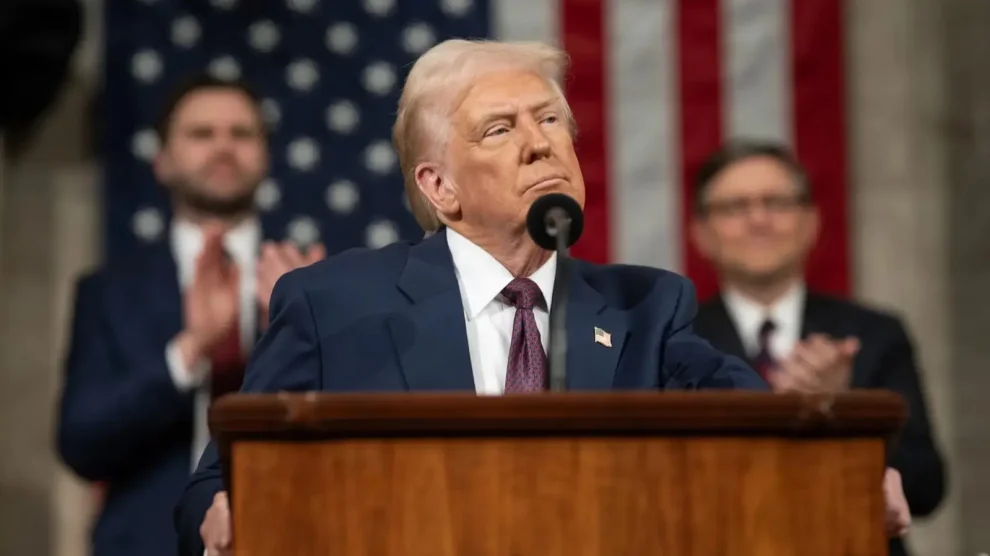
In his conversation with Hedges, published in Pearls and Irritations, Mearsheimer described the asymmetry of incentives: Israel fears that any agreement without regime change would be read as an Iranian victory; the administration of Donald Trump, by contrast, would prefer to close the conflict before the midterm elections but cannot find a viable exit.
In his discussion with Switzer, he was more direct about the geopolitical consequences, arguing that the message the United States is sending the world is that of a power that started a war it cannot win.
What the market is already pricing — and what it is not
A geopolitical risk premium in crude is not new in 2026. What is new is its persistence and mechanism. In previous conflicts — such as the Gulf War, the Iraq War and the Russia-Ukraine war — markets took weeks or a few months to recalibrate once conditions stabilized or alternative routes were established. The current conflict has a structural difference: there can be no stabilization without a political agreement, and that agreement requires the United States, Israel and Iran to have simultaneous incentives to compromise.
Mearsheimer argues that such a scenario does not exist today.
In that context, Brent above $100 per barrel shifts from being an event to becoming a floor. Not a guaranteed floor — markets do not operate on certainties — but a reasoned one: as long as the conflict lacks a verifiable termination condition, the risk premium has structural reasons to persist. White House energy adviser Bob McNally was even more explicit, stating that there are no energy policy solutions capable of offsetting a prolonged closure of the Strait of Hormuz.
That is compounded by damage to Gulf liquefied natural gas infrastructure. Iranian strikes on Ras Laffan — Qatar’s main LNG hub, responsible for roughly 20% of global supply — have taken offline capacity equivalent to 12.8 million tonnes per annum (MTPA), with a recovery timeline of three to five years, according to Saad al-Kaabi in remarks to Reuters on March 19.
Wood Mackenzie estimated the same day that each additional month of disruption removes roughly 1.5% of annual global LNG availability. There is no immediate redundancy: unlike oil, liquefaction trains cannot be improvised.
Strategic distraction and the vacuum it creates
There is a second-order implication of Mearsheimer’s argument that energy markets are processing more slowly. If the United States is tied down in a secondary theater, who maintains the global energy security architecture?
The political scientist framed it in terms of great power competition — China taking advantage of U.S. dispersion to advance in Taiwan, in technology controls and in competitive positioning — but the question translates directly into the LNG market.
The Center for Strategic and International Studies (CSIS) put it bluntly in a mid-March analysis: the Trump administration’s reindustrialization agenda and other initiatives could be undermined if resource concentration on the Iran conflict persists. In parallel, the Soufan Center reported on March 18 that Washington was in talks with South Korea to redeploy missile defense systems from the Korean Peninsula to the Middle East — a move that weakens the U.S. position in the Indo-Pacific at a time when China is consolidating its footing.
For LNG markets, that vacuum has a clear translation. Asian buyers that relied on Qatar for long-term contracts — South Korea, China and Japan — are urgently reassessing supply options from projects positioned to fill that gap over the medium term. Australia and the United States are absorbing part of the spot demand. The rest is floating in a market with no immediate redundancy, with the Asian LNG benchmark JKM rising nearly 39% in a single session after Qatar’s first force majeure announcement on March 2.
The floor the market has already priced in
Mearsheimer does not speak about oil prices. He speaks about strategic errors, wars of choice and the logic of states in an international system without an arbiter. But his core thesis — that the conflict with Iran lacks a verifiable termination condition and that the United States is diverting resources it will need for long-term competition with China — carries direct implications for energy markets.
If his diagnosis is correct, or even partially so, the market is operating with a risk premium that will not disappear with the next White House statement or the next round of talks in Oman. Brent at $112, with a high of $119 on March 19, is not a panic spike — it is the market processing the possibility that, for a time, this is the new normal.