
Urgent analysis
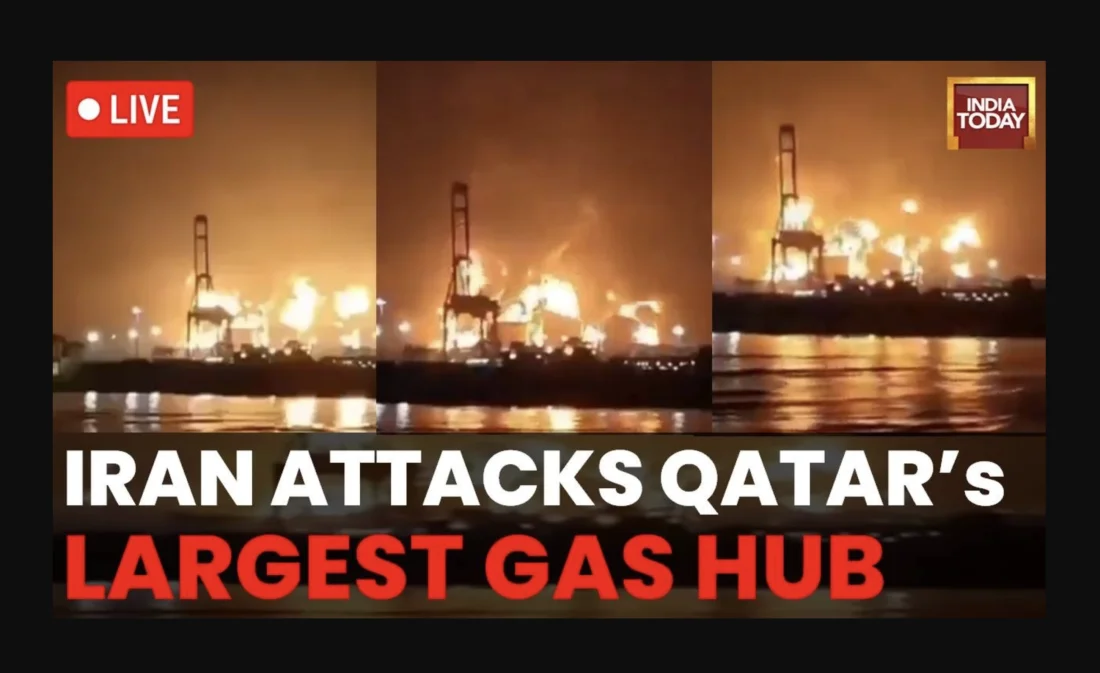
The war in the Persian Gulf has entered a new phase.
It is no longer about attacks on military bases or nuclear facilities. On Wednesday, March 18, the Islamic Revolutionary Guard Corps (IRGC) launched missiles at Ras Laffan, the industrial city in northeastern Qatar that, prior to the strikes, hosted the world’s largest liquefied natural gas (LNG) export complex. QatarEnergy confirmed significant damage. Emergency crews were deployed immediately and, according to Qatar’s energy minister, Saad al-Kaabi, a full restart could take weeks or months.
It was not the only target that day. Saudi Arabia reported attacks on two refineries in Riyadh and on the SAMREF plant in Yanbu, on the Red Sea coast. In Kuwait, a drone struck a unit at the Mina Al-Ahmadi Refinery — one of the largest in the Middle East — sparking a fire that was contained without casualties. Twelve Arab and Islamic countries, meeting in Riyadh, issued a joint statement calling for an immediate halt to the attacks.
The price the world pays
Markets did not wait. Brent crude was trading at $111.42 per barrel, up 3.76% from the previous day. Since the start of the conflict on Feb. 28, it has risen by about 50%; year to date, gains are approaching 68%. West Texas Intermediate (WTI) moved in tandem, trading near $97 per barrel at the time of writing.
In gas, the moves are even sharper. The Asian LNG benchmark, the Japan Korea Marker (JKM), was trading at $20.175 per million British thermal units (MMBtu), up from $15.068/MMBtu at the start of the conflict. That represents an increase of roughly 34% in three weeks and about 60% since Feb. 28, according to data from Kpler.
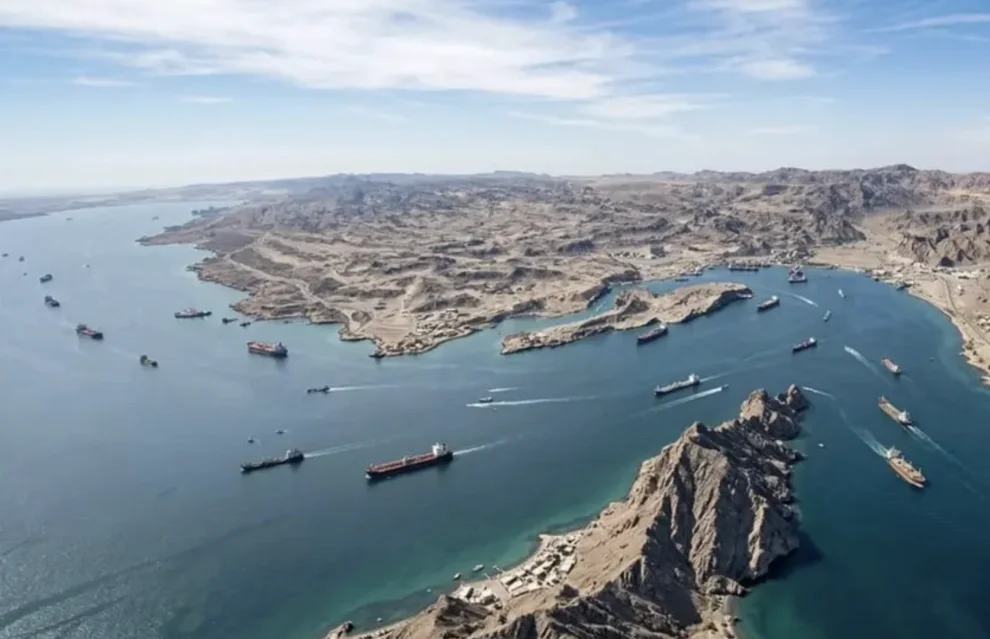
The Strait of Hormuz — through which roughly 20% of globally traded oil and LNG flows — is operating under severe restrictions. Iran has threatened navigation through the corridor and is considering legislation to impose a mandatory transit toll on vessels.
The map of struck assets
Since the start of the conflict, the war has had two simultaneous energy fronts: attacks by Israel and the United States on Iran’s production infrastructure, and Iran’s retaliation against facilities in neighboring Gulf states. What follows is a record of affected assets on both sides, with particular focus on the past 24 hours.
Israel and U.S. strikes on Iranian energy infrastructure
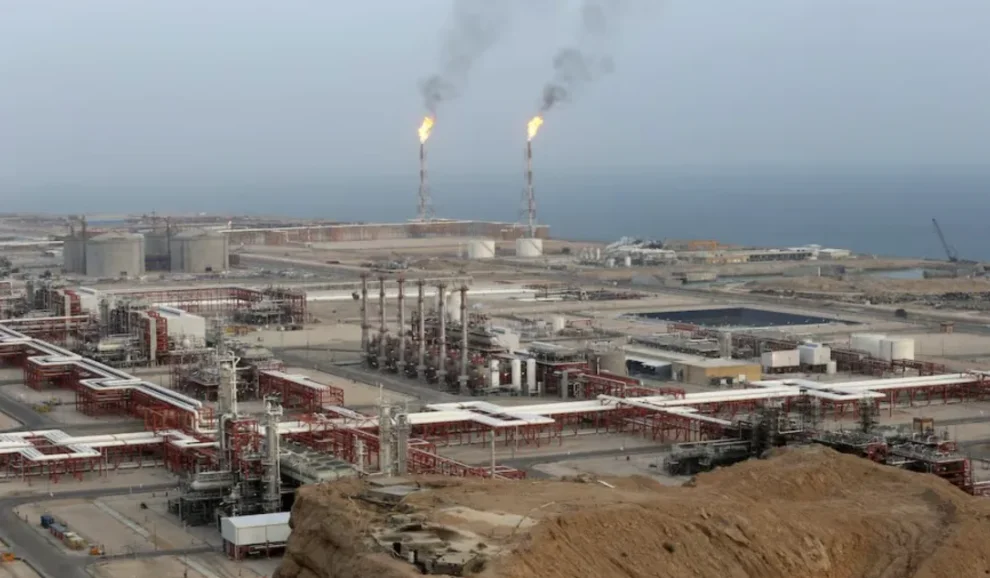
Date Installation Verified impact Early March Tehran oil storage sites Fires, with flames spreading through irrigation channels ~March 14 Kharg Island More than 90 targets hit; the island handles about 90% of Iran’s crude exports March 18 South Pars / Asaluyeh Four refineries damaged; fires and worker evacuations. The complex accounts for 78% of Iran’s domestic gas supply, according to the International Energy Agency.
Iranian strikes on Persian Gulf energy infrastructure
Date Installation/Country Verified impact ~March 2 Ras Tanura, Saudi Arabia (Saudi Aramco) Significant attack; first direct strike on Aramco since 2019. ~March 12 Oil terminals, Iraq and Oman Temporary shutdown; two tankers set on fire; one sailor killed. ~March 12 Fuel tanks, Bahrain International Airport Iranian drone; smoke plume over Manama. ~March 12 Storage facilities, Oman Hit in the same wave as tanker attacks. ~March 14–16 Oil port, Fujairah (United Arab Emirates) Tanker struck; facilities hit multiple times. ~March 16 Al Hosn Gas Field, Abu Dhabi Temporary suspension after drone strike. March 18 Ras Laffan, Qatar (QatarEnergy) Two hits in 12 hours; significant damage confirmed; LNG output temporarily suspended; restart in weeks to months. March 18–19 Mina Al-Ahmadi, Kuwait Drone hit a unit; minor fire contained; no casualties. March 18–19 SAMREF, Yanbu, Saudi Arabia Airstrike; minimal damage, according to Saudi sources. March 18–19 Two refineries in Riyadh, Saudi Arabia Targeted; ballistic missiles intercepted by Saudi air defenses.
At sea, more than 20 vessels have reported incidents in the Persian Gulf, the Strait of Hormuz and the Gulf of Oman since the start of the war, according to the United Kingdom Maritime Trade Operations agency.
What it means for Argentina
For Vaca Muerta, the shock has two parallel readings.
The first is favorable. Argentina is currently producing 882,200 barrels per day — a historic record in January 2026, with year-over-year growth of 16.5% driven by the Neuquén Basin, according to the Economy Ministry — and sustained growth in crude exports has positioned the country as a net exporter of liquid hydrocarbons. Brent above $100 directly boosts cash flow for exporting operators and, according to estimates by consultancy Economía y Energía, could mean an additional $3 billion in export revenue compared with pre-conflict levels.
The second reading is more challenging. Argentina still imports LNG to meet peak winter demand, and that gas now costs about 60% more. Imported diesel prices are also rising. With roughly 90% of freight transported by truck, higher fuel costs feed through to the broader economy. Industry sources note that once the Vaca Muerta Oil Sur (VMOS) pipeline comes online by year-end, there will be greater capacity to capitalize on higher prices. For now, transportation constraints limit how much of that opportunity can translate into export volumes.
The open question
Ras Laffan is not only the world’s largest LNG hub; it is also seen as the main competitor to the two LNG projects Argentina has underway. Southern Energy — a consortium including Pan American Energy, YPF, Pampa Energía, Harbour Energy and Golar LNG — took its final investment decision in May 2025 and has signed a 2 million ton per year offtake agreement with Germany’s Securing Energy for Europe, with deliveries starting in late 2027.
The project targets a combined capacity of 6 million tons per year using two floating liquefaction units (FLNG) in the Gulf of San Matías. In parallel, a consortium formed by YPF, ENI and XRG — the international investment arm of ADNOC — is aiming for a final investment decision in the second half of this year, with a target capacity of 12 million tons per year and first exports expected around 2030–31. With QatarEnergy offline for weeks or months, the gap in Asian and European markets is tangible. And the pitch that Horacio Marín made to banks in New York last week has just become more urgent.
Donald Trump warned that he would respond if Iran attacks Qatar again and said Israel will not carry out further strikes on South Pars. If that restraint holds, markets could begin to stabilize. If not, Qatar’s energy minister has already outlined the scenario: a total collapse of Gulf exports could push Brent to $150 per barrel.