
War in the Middle East
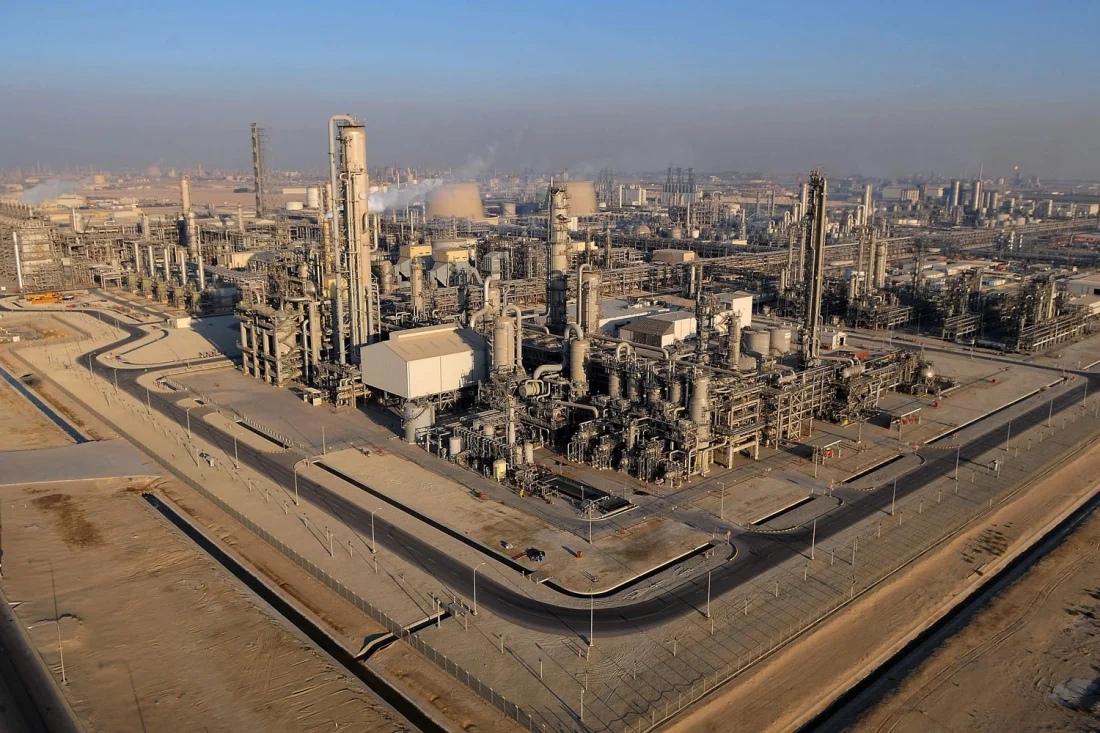
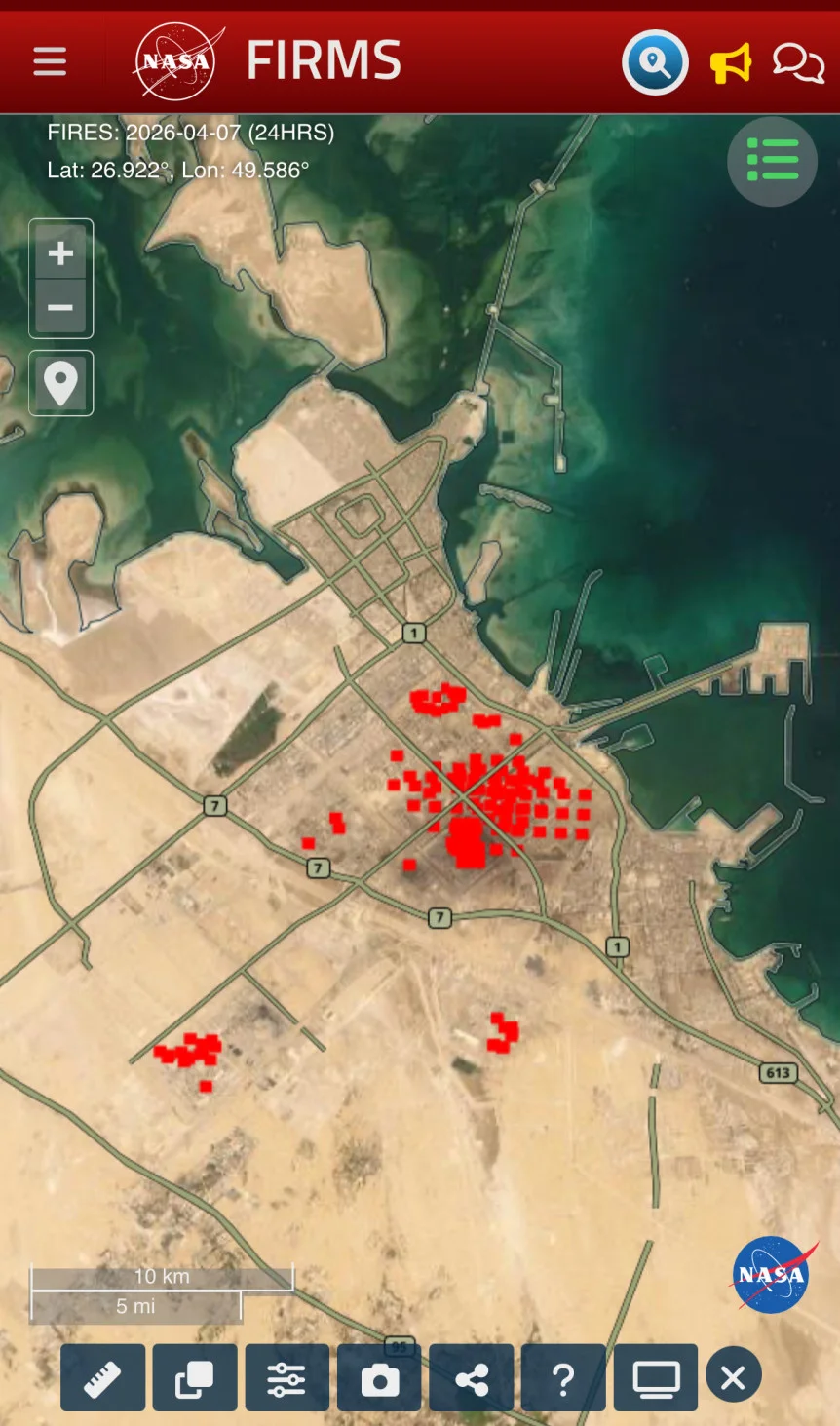
Iran's Islamic Revolutionary Guard Corps (IRGC) struck Al Jubail Industrial City in Saudi Arabia's Eastern Province on Monday with ballistic missiles and drones, igniting fires at facilities operated by SABIC, Saudi Arabia's state petrochemical company and a majority-owned subsidiary of Saudi Aramco. The attack was confirmed by Drop Site News, a U.S. investigative news outlet, citing imagery distributed by Fars News, Iran's state-affiliated news agency.
The strike follows an IRGC target list published on March 18, after the Israeli-U.S. strike on Iran's South Pars gas field, the world's largest natural gas reservoir shared with Qatar, naming four specific objectives: the SAMREF refinery in Yanbu, a Saudi Aramco–ExxonMobil joint venture on Saudi Arabia's Red Sea coast; the Al Jubail Petrochemical Complex; the Al Hosn gas field in the United Arab Emirates, operated by ADNOC, Abu Dhabi's state oil company; and Ras Laffan and Mesaieed, Qatar's two main industrial and petrochemical export hubs.
With the Strait of Hormuz closed since mid-March, and 35 countries now coordinating a reopening framework without U.S. participation (a diplomatic effort initiated in late March 2026 and led by European and Asian nations), Iran followed through on its stated Saudi target.
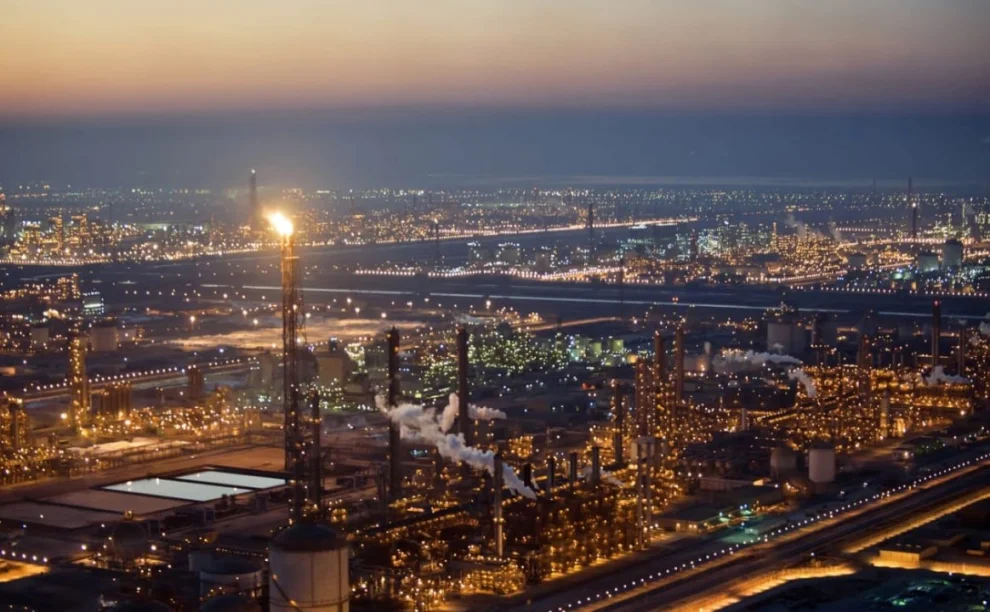
Al Jubail: What the Strike Hit
Al Jubail Industrial City is the world's largest concentration of petrochemical infrastructure. Its more than 60 million tonnes per annum (MTPA) of installed capacity represents between 6% and 8% of global petrochemical output. Operating within the complex are SABIC, with ExxonMobil, the U.S. energy major, as a joint venture partner in several plants; Sadara Chemical, the $20 billion joint venture between Saudi Aramco (65%) and Dow, the U.S. chemicals company (35%), which had halted production on March 31 due to supply chain disruption; and the Amiral project, a joint venture between Aramco and TotalEnergies, the French energy major, currently under construction.
Sadara operates a 1.5 MTPA ethylene cracker and produces more than one million tonnes of polyethylene, as well as propylene oxide, glycols, and amines. SABIC had already declared force majeure on ethanolamines, monoethylene glycol (MEG), diethylene glycol (DEG), styrene, and methanol from March 26–27. Both disruptions were already weighing on global petrochemical supply chains before Monday's physical damage to the complex.
Brent at $110 Before the Strike
Brent crude was trading around $110/barrel Monday morning, up nearly 80% year-to-date in 2026. WTI was trading near $112–113/barrel. Bloomberg reported this week that the physical barrel in the spot market had surpassed levels not seen since 2008, reflecting acute tightness in immediate supply.
Goldman Sachs described the Strait disruption in a March 22 note as the "largest-ever supply shock for the global crude market." Analyst Daan Struyven raised the firm's average 2026 Brent forecast to $85/barrel, projecting Brent would average $115/barrel in April before retreating to $80 by year-end under a base-case scenario of six weeks of Strait disruption. The bank separately outlined a risk scenario in which a prolonged disruption would push prices above the 2008 all-time record — a scenario constructed before Monday's strike.
S&P Global CERA projects an average Brent price of $125/barrel in April. The naphtha crack spread in Asia climbed from $68 per metric tonne over Brent in February to $190/MT in March. BloombergNEF estimates that 30% of global ethylene supply could be affected by the accumulation of Gulf disruptions. Saudi Aramco raised its Arab Light crude official selling price for Asia to a record premium of $19.50/barrel over the benchmark on Monday.
Saudi Aramco CEO Amin Nasser warned on the company's March 10 earnings call: "There would be catastrophic consequences for the world's oil markets and the longer the disruption goes on … the more drastic the consequences for the global economy." Production losses across the Middle East currently stand at 11 million bbl/d, with a projected peak of 17 million bbl/d before any recovery.
Ceasefire Signals, Escalation, and Demand Shock
The Al Jubail strike comes amid mixed diplomatic signals. On Sunday, April 5, Pakistan delivered a 45-day ceasefire proposal to Washington and Tehran with the backing of Qatar and Switzerland. Brent futures had retreated to around $109/barrel on that expectation. Monday's attack reversed those gains: WTI surpassed $113/barrel following statements by U.S. President Donald Trump signaling that Iran could face military action as early as Tuesday night.
The damage extends well beyond commodity markets. JPMorgan analysts warned Monday that countries across South and Southeast Asia, including Bangladesh, Sri Lanka, Pakistan, Indonesia, and the Philippines, are experiencing direct shortages, refinery closures, reduced flights, remote schooling, emergency declarations, and visible demand destruction. Australia reported diesel shortages. According to Kpler data cited by Bloomberg, approximately 50 LNG tankers deployed by Qatar for its LNG exports remain idle in Asian ports.
Morgan Stanley warned in recent reports that the oil shock poses a portfolio problem alongside a commodity one: sustained prices above $100/barrel could cause equities and bonds to move in the same direction simultaneously, complicating portfolio diversification at the worst possible moment. Wolfe Research analyst Tobin Marcus remains skeptical that meaningful diplomatic progress with Iran is achievable in the near term.
Energy Aspects analyst Joseph McDonnell told Bloomberg that the wave of petrochemical plant closures across the Gulf had only begun, and that more were likely to follow.
Gas Markets Under Pressure
The disruption extends beyond oil markets. The Ras Laffan complex in Qatar, Qatar's main LNG and petrochemical export hub responsible for approximately 20% of global LNG supply, has been operating under force majeure since March 18–19. Goldman Sachs raised its European TTF, Europe's natural gas benchmark, price forecast for the second quarter of 2026 to €63/MWh from €45, with risk of exceeding €100/MWh if the disruption extends beyond two months. Bloomberg Opinion columnist Javier Blas warned at CERAWeek, the annual global energy conference organized by S&P Global, that the world has no adequate mechanism to offset a prolonged Strait of Hormuz closure.