
A complete guide to Iranian oil
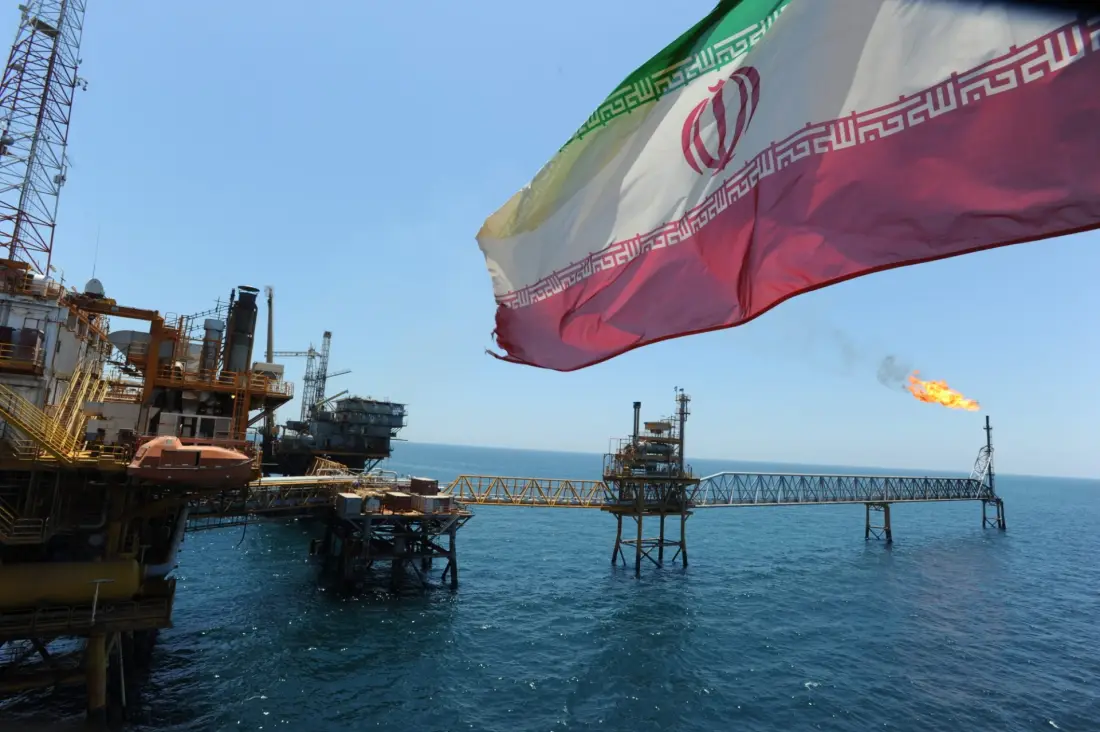
In a global context in which energy remains a strategic pillar, Iranian oil—particularly the Iranian Light Crude Oil (Iranian Light) and Iranian Heavy Crude Oil (Iranian Heavy) grades—represents not only a source of national wealth but also a focal point of international tensions.
Iran, one of the main players in the global oil market, faces a delicate balance between its vast reserves, its production capacity and the weight of economic sanctions. This article provides a comprehensive and updated overview as of 2026 to explain the essentials of this vital resource.
History of Iran’s oil industry
Oil development in Iran dates back to the early 20th century, with the discovery of the first commercial well in 1908 by the Anglo-Persian Oil Co., a predecessor of BP. During the 1970s, under the Shah’s rule, Iran reached its historical production peak in 1974 at more than 6 million barrels per day (bpd). The 1979 Islamic Revolution, followed by the Iran-Iraq War from 1980 to 1988, marked a sharp decline, compounded by international sanctions and the nationalization of the industry under the National Iranian Oil Co. (NIOC).
Despite these obstacles, Iran has maintained its status as a founding member of OPEC, although it has been exempt from production quotas because of external restrictions. In recent decades, the sector has alternated between periods of recovery and setbacks. After the 2015 nuclear deal, formally known as the Joint Comprehensive Plan of Action, production stabilized around 3.8 million bpd. But the U.S. withdrawal from the agreement in 2018 and the reimposition of sanctions drove output down to about 2 million bpd in 2020. By 2026, Iran has shown resilience, recovering levels close to those seen before sanctions through strategies such as price discounts and alternative export routes.
Reserves and current production
Iran holds the world’s third-largest proven oil reserves, estimated at about 208 billion to 209 billion barrels at the end of 2024, representing roughly 12% of global reserves and 24% of those in the Middle East. Only Venezuela and Saudi Arabia rank higher. Iran also has the world’s second-largest natural gas reserves, at 34 trillion cubic meters, or about 17% of the global total.
In production terms, Iran is OPEC’s fourth-largest crude producer and the ninth-largest worldwide. In November 2025, output reached about 3.5 million bpd, a significant increase from 2.9 million bpd in 2019 despite sanctions. In 2023, total liquids production, including condensates and liquefied gases, averaged about 4 million bpd, of which 2.9 million bpd was crude oil.
The sector, however, suffers from chronic underinvestment. Analysts estimate at least $3 billion is needed to recover about 400,000 bpd lost since 2018, and without intervention, production could fall to 2.75 million bpd by 2028. The main fields are concentrated in Khuzestan, near the Iraqi border, and on islands such as Kharg, which handles most exports.
Aspect Key data (2025-2026) Proven crude oil reserves 208-209 billion barrels Daily crude production 3.2-3.5 million bpd Total liquids production around 4 million bpd Natural gas reserves 34 trillion m³
Iranian oil production process
Oil production in Iran follows a standard industry process adapted to mature fields and local geology. It begins with seismic exploration and exploratory drilling to identify reserves, mainly in the southwest, including the supergiant Ahwaz, Gachsaran and Marun fields, and offshore in the Persian Gulf. Once confirmed, development wells are drilled.
Extraction is carried out in stages: primary recovery, which relies on natural reservoir pressure and recovers about 10% to 15% of the oil; secondary recovery, which involves water or gas injection to maintain pressure and is widely used in Iran, raising recovery to 30% to 40%; and tertiary or enhanced oil recovery, which Iran uses extensively through gas injection, chemicals or steam to extract an additional 50% to 60% in mature fields. NIOC operates most fields, using technologies such as downhole pumps and offshore platforms.
Because of sanctions, Iran has developed local capabilities, but it faces challenges in maintenance and access to advanced technology. This reduces efficiency and accelerates natural field decline, estimated at 8% to 10% per year without intervention.
Types of Iranian crude: Iranian Light, Iranian Heavy, Forozan, Soroosh, Lavan, Sirri and Cyrus
Iranian oil is classified into several grades based on density, measured in API gravity, sulfur content and other properties, tailored to different refineries worldwide. Most are sour crudes, with sulfur content above 0.5%, and range from medium to heavy, making them well suited for Asian markets with refineries designed to handle high sulfur levels.
The main export grades are Iranian Light and Iranian Heavy, with official specifications set by NIOC.
- Iranian Light: A light-to-medium crude with API gravity of 33 to 36 degrees, specific gravity of about 0.857 at 15.56 degrees Celsius, sulfur content of 1.36% to 1.5%, moderate sourness, kinematic viscosity of about 16 square millimeters per second at 10 degrees Celsius, a pour point of minus 8 degrees Celsius and low heavy metals. It is well suited for producing high-yield gasoline and diesel, with a distillation yield of about 20% light fractions and 50% middle distillates. It is the most in-demand Iranian grade in Asia because of its versatility.
- Iranian Heavy: A heavy crude with API gravity of 29 to 30 degrees, specific gravity of 0.878, sulfur content of 1.77% to 2.24%, higher sourness, kinematic viscosity of about 30 to 40 square millimeters per second at 10 degrees Celsius, a pour point around 0 degrees Celsius and higher asphaltene content. Distillation yields about 15% light fractions and a high proportion of heavy fuel oil. It is used in complex refineries to produce fuel oil and asphalt.
Other minor grades, produced in specific fields and often blended for export, include:
- Forozan (or Forouzan Blend): A heavy crude (API gravity 28–29 degrees) with high sulfur content (2.5%–3%), similar to Iranian Heavy but with higher viscosity. It is produced from offshore fields and typically processed in refineries geared toward heavy products.
- Soroosh (or Soroush): One of Iran’s heaviest crudes (API gravity 19–20 degrees), with very high sulfur content (3%–4%) and elevated asphaltenes, resulting in high viscosity. Produced offshore, it requires diluents for transportation and is well suited for upgrading into synthetic crudes.
- Lavan: A light crude (API gravity 36–37 degrees) with low sulfur content (1%–1.2%) and low viscosity. Produced on Lavan Island, it is valued for its high yields of naphtha and kerosene.
- Sirri: A light-to-medium crude (API gravity 33–34 degrees) with moderate sulfur content (about 1.5%), similar to Iranian Light. It comes from fields on Sirri Island and has a favorable profile for atmospheric distillation.
- Cyrus (or Darood): A specialty blend (API gravity about 30–32 degrees) with sulfur content of roughly 2%, combining crudes from multiple fields. It is flexible and tailored to specific market requirements.
These crudes are exported mainly through terminals in the Persian Gulf. To counter sanctions, Iran typically offers discounts of $6 to $15 a barrel, reducing revenue but sustaining volumes.
Refining process
Iran refines most of its crude for domestic consumption, with installed capacity of about 2 million bpd. Key refineries include Abadan, the country’s largest at roughly 400,000 bpd, as well as Isfahan and Tehran. The process begins with atmospheric distillation, separating crude into fractions by boiling point, including light gases, naphtha for gasoline, kerosene for jet fuel, diesel and heavy residues.
Residues are sent to vacuum distillation to extract additional diesel and lubricants, followed by fluid catalytic cracking to break heavy molecules into gasoline and olefins. Given the high sulfur content of Iranian crudes, hydrotreating is widely used to remove impurities and produce cleaner fuels. Other units include catalytic reforming to boost gasoline octane and alkylation to improve quality.
Iran has invested in upgrading capacity to handle heavy crudes such as Soroosh, but sanctions have limited modernization. As a result, the country still relies on some gasoline imports despite its vast reserves.
By 2026, projects such as the Persian Gulf Star refinery have increased self-sufficiency and focused on exporting refined products like diesel and fuel oil.
Exports and main markets
Iran exports between 1.5 million and 2.3 million bpd, a recent record despite restrictions, generating about $53 billion in revenue in 2023. China absorbs more than 90% of these exports, purchasing at discounted prices and using transshipment routes through Malaysia, Oman and the United Arab Emirates to bypass sanctions.
Other markets include India, South Korea and, to a lesser extent, Venezuela and Iraq. In 2026, floating storage of Iranian crude reached record levels of about 166 million to 170 million barrels because of shipping bottlenecks and weaker Chinese demand.
Heavy dependence on China exposes vulnerabilities. Any escalation in U.S. tariffs could curb exports and affect 70% to 80% of Iran’s fiscal revenue, which depends on oil.
Impact of international sanctions
Sanctions led by the United States under a “maximum pressure” policy reinstated in 2025 by the Trump administration have been the main obstacle. They do not directly ban oil exports but penalize banks, shipping companies and buyers involved, focusing on the so-called shadow or ghost fleet of tankers carrying Iranian crude.
Since 2018, exports fell from 2.6 million bpd to about 400,000 bpd in 2019. Iran has since circumvented restrictions through discounts and alternative routes, recovering up to 1.8 million bpd in 2024.
In 2026, antigovernment protests in Iran have lifted global oil prices by $3 to $4 a barrel because of fears of disruptions, compounded by tanker attacks and broader geopolitical tensions. If sanctions tighten further, revenues could fall below $18 billion a year, worsening inflation above 90% and accelerating currency depreciation.
Outlook and challenges
Looking ahead, Iran could raise production to about 3.8 million bpd within six months if sanctions are lifted. But chronic underinvestment, estimated at a $250 billion shortfall, and competition in shared fields such as South Pars with Qatar and West Karun with Iraq continue to erode potential. Diversification into natural gas and refined products is a priority, but it depends on foreign investment constrained by geopolitical risk.
In short, Iranian oil remains a strategic asset that underpins the national economy, but its future is tied to global dynamics, from Chinese demand to U.S. policy. In a world moving toward energy transition, Iran must navigate between resilience and reform to maximize its resources without yielding to external pressure.
Reserves and oil quality
Venezuela and Iran lead in proven reserves but differ sharply in crude quality.
Proven reserves (2025):
- Venezuela: about 303 billion barrels, the world’s largest
- Iran: about 208 billion to 209 billion barrels, third-largest
Venezuela exceeds Iran by about 95 billion barrels, or 46%, but most of its crude is extra heavy and costly to extract and refine. Venezuela’s benchmark grade is Merey 16.
Crude quality comparison
Característica Venezuela (Orinoco/Faja) Iran (Light/Heavy) API gravity 8-16° (extra heavy) 29-36° (medium to light) Sulfur High (3-5.5%, very sour) Medium (1.5-2.5%, sour) Viscosity Very high, requiring diluents Moderate to low Extraction and refining Highly complex and costly Simpler, compatible with standard refineries Market discount Strong ($10-20+ a barrel) Moderate ( $6-15 a barrel) Main markets China, India (limited) China (90%+), India, South Korea
In essence, Venezuela has larger reserves on paper, but its extra-heavy crude requires massive investment and specialized refineries, limiting actual output under sanctions. Iran’s lighter, easier-to-process crude allows it to export much larger volumes under similar restrictions.
Importance of Iranian diluent exports to Venezuela
Venezuela mainly produces extra-heavy crude from the Orinoco Belt, with API gravity of 8 to 10 degrees, high viscosity and high sulfur content. It does not flow easily through pipelines or transport systems without treatment. To export it as Merey 16, with about 16 degrees API gravity and sulfur content of roughly 2.7% to 3.5%, PDVSA must dilute it with 20% to 40% light diluents, such as condensates, naphtha or light crude, in an approximate 60-40 heavy-to-light ratio.
Without sufficient diluents, upstream production quickly comes to a halt—within weeks—because the crude cannot be moved or exported. Iran, thanks to its abundant output of light condensates from the South Pars field (API gravity about 50–60 degrees, with very low sulfur content and viscosity), has supplied diluents to Venezuela since 2020 through swap arrangements that include shipments of Merey 16 to Iran as partial payment. These cargoes—ranging from hundreds of thousands to millions of barrels per shipment—have been critical to:
- Sustain and temporarily increase Venezuelan production, for example boosts of 50,000 to 100,000 bpd following arrivals of Iranian condensate.
- Enable steady exports of Merey 16 to markets such as China, its main buyer.
- Circumvent mutual sanctions through barter deals—condensate in exchange for heavy crude, or Iranian gasoline for Merey—strengthening bilateral cooperation between two sanctioned countries.
By 2026, while sources of diluents have diversified, including the United States until 2025 and more recently Russia, Iranian condensate remains strategic. It offers Venezuela a reliable and low-cost option, generates revenue for Iran through swaps and underscores the anti-sanctions alliance between Tehran and Caracas. Without these diluents, Venezuelan production could fall sharply, reducing Merey supply and affecting complex refineries that rely on it.