
Industrial modernization and energy transition
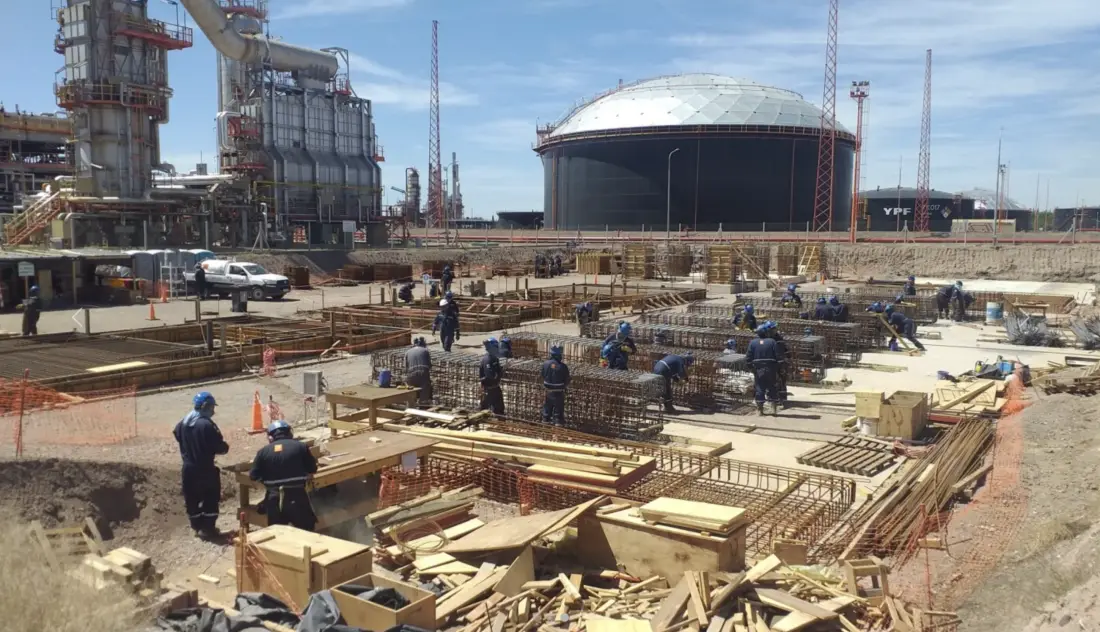
The start-up of the H2 II unit at the Luján de Cuyo Industrial Complex marks a milestone in the NEC B project (New Fuel Specifications B), one of YPF’s most important initiatives to modernize its refining system and align production with international environmental standards.
Objectives of the NEC B project
NEC B aims to bring the Mendoza-based complex in line with new fuel quality specifications, with a primary focus on sharply reducing sulfur content in gasoline and diesel.
Once fully operational —with full start-up expected this year— the project will ensure that 100% of diesel produced meets a 10 ppm sulfur limit, one of the strictest standards worldwide. This improvement lowers pollutant emissions, raises fuel quality, and extends engine life.
The H2 II unit, officially inaugurated in February 2026, is central to this transformation. It produces high-purity hydrogen (over 99.9%), an essential feedstock for hydrodesulfurization (HDS) processes that remove sulfur from petroleum derivatives.
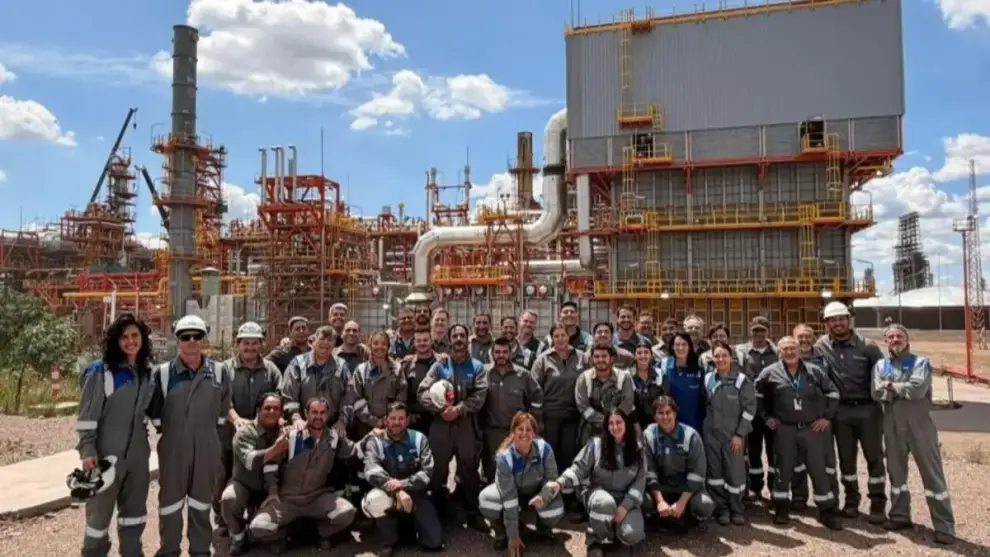
The plant not only supports internal processes at the complex but has also begun exporting high-purity hydrogen, strengthening YPF’s downstream competitiveness and export profile.
The NEC B project includes multiple elements: construction of new facilities —including H2 II and the SE33 unit— upgrades to existing units, and installation of a large reactor (HG-D-3501, weighing 456 tons and 38 meters long, installed in 2025).
Earlier phases highlighted prefabricated modules by AESA (A-Evangelista SA), ranging from 24 to 30 meters long, 7.5 meters wide, and 5 meters high, integrating structures, piping, and equipment. The approach emphasizes prefabrication and modularization, crucial for optimizing timelines and logistics in a complex industrial environment.

In practice, AESA, the YPF group’s engineering, manufacturing and assembly company, played a leading role by contributing expertise in heavy logistics, electromechanical assembly and technical coordination.
The project required coordination with YPF’s Industrial Projects Management, complex personnel, contractors, and suppliers, generating around 500 direct jobs while boosting local SMEs.
As Gustavo Gallino, YPF vice president of Infrastructure, said, “The coordinated work of many teams today translates into a tangible result.” He highlighted that the transformation progresses when common objectives are aligned, prioritizing operational safety and technical excellence. With this step, YPF strengthens its strategy to raise standards, reduce environmental impact, and position Argentina as a producer of world-class fuels.