
Why is important

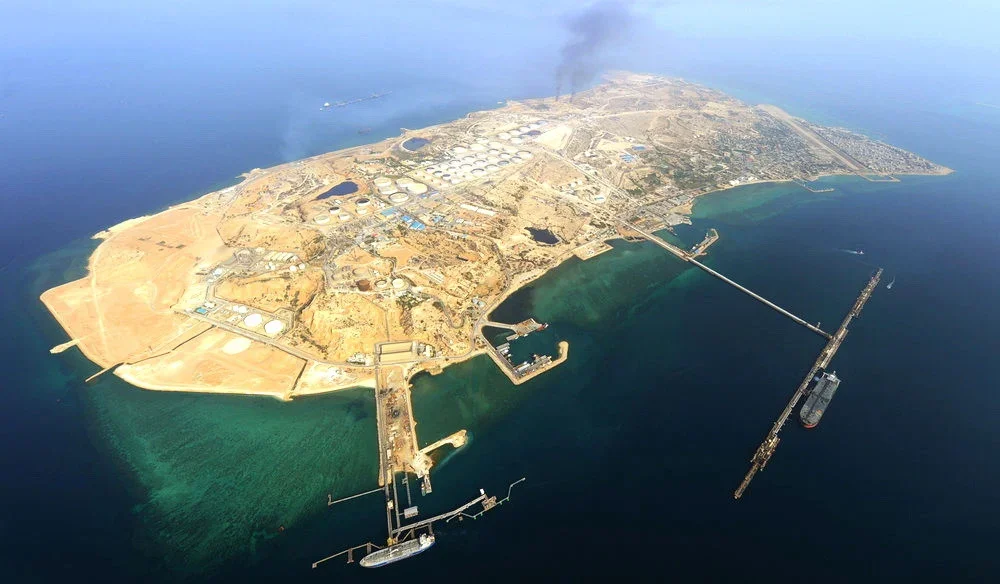
Kharg Island, which routes 94% of Iran's crude and condensate exports and has no viable equivalent anywhere on the Iranian coastline, came under confirmed attack again Tuesday. A U.S. official told Axios that fresh military strikes had targeted the island; Iran's Mehr news agency reported explosions.
The Islamic Revolutionary Guard Corps (IRGC) declared that all restraint had been removed and threatened to strike U.S. and allied energy infrastructure across the region, warning it would deprive the United States and its allies of regional oil and gas for years. Tuesday marks the most significant escalation of the current Middle East conflict since its outbreak on February 28, placing at the center of the crisis the single piece of infrastructure that no Iranian contingency plan can replace.
Deep Water, No Substitute: Kharg's Geographic Monopoly on Iranian Crude Exports
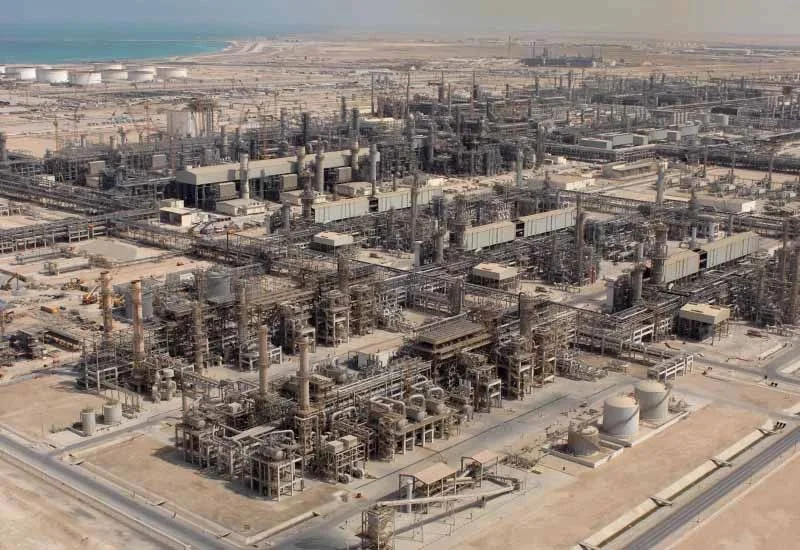
Eight kilometers long, four wide. In the northern Persian Gulf, roughly 25 kilometers off the Iranian coast and more than 480 kilometers northwest of the Strait of Hormuz, a coral-rock island of just 22 square kilometers concentrates the most critical export assets in Iran's oil system. Kharg does not produce the bulk of the country's crude. It ships almost all of it.
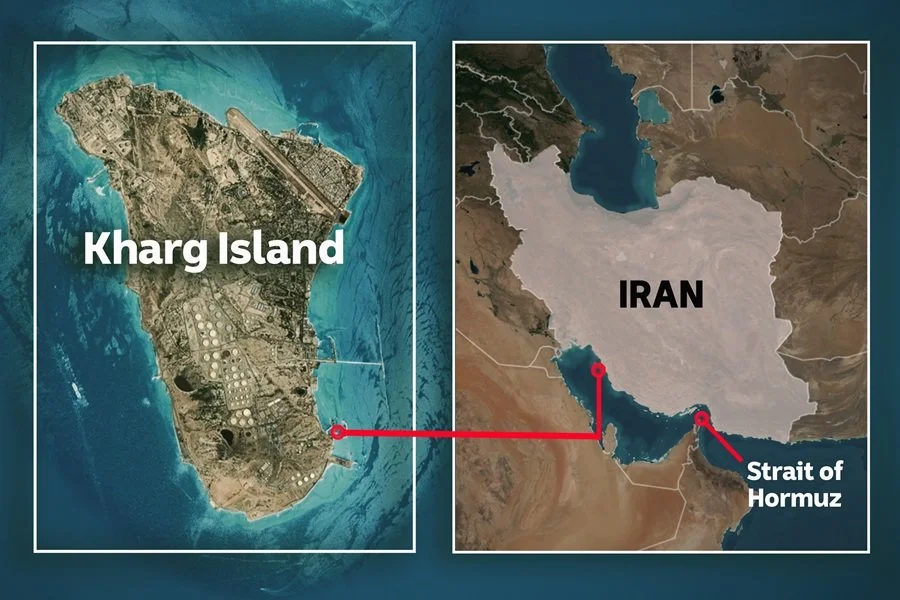
What distinguishes Kharg from other Gulf terminals is not its size but the water depth surrounding it. Most of Iran's coastline is too shallow for very large crude carriers (VLCCs), vessels of up to 300,000 deadweight tonnes capable of loading up to 2 million barrels per voyage, to operate directly. Kharg is surrounded by naturally deep water that allows direct berthing for this class of vessel. That geographic attribute cannot be replicated at any other point on the Iranian coast.
The terminal, operated by the Iran Oil Terminals Company (IOTC), Iran's state crude export terminal operator, has two primary loading docks: T-Dock on the eastern coast and Azarpad on the western coast. Per IOTC data, the transfer rate at the eastern dock exceeds 670,000 barrels per hour; total installed loading capacity is cited at 7 million barrels per day, with capacity for ten simultaneous VLCCs.
Five Submarine Pipelines, Three Giant Fields: The Upstream Architecture Feeding a Single Terminal
Crude does not reach Kharg via overland pipeline. It arrives through five submarine pipelines connecting the island to the main fields of southwestern Iran. Ahvaz, Marun, and Gachsaran, considered the three most productive fields in the country, pump production to the island on a near-continuous basis. Offshore output from the Aboozar, Forouzan, and Dorood blocks feeds the same system, along with production from the Falat Iran Oil Company, an Iranian state upstream operator active on the island itself, at approximately 500,000 barrels per day.
According to Kpler, the energy data and analytics firm, total storage capacity at the terminal reaches approximately 31 million barrels. As of March 7, inventories stood at roughly 18 million barrels, around 58% of capacity, giving Tehran an operational buffer against logistical disruptions. That buffer is not merely logistical: in the weeks before the conflict began, Iran used it deliberately to accelerate shipments.
Kpler data show that over the past 12 months, 94% of Iran's crude and condensate exports originated from Kharg: approximately 553 million barrels out of a national total of 587 million moved through this single terminal. China is the near-exclusive destination. The principal receiving facilities are independent refineries in Shandong province (known in the market as teapots, mid-scale processors operating outside China's major integrated refining groups) taking deliveries at the ports of Dongjiakou, Qingdao, and Lanqiao.
For China, Iranian crude arrives at a significant discount to Brent, effectively subsidizing the margins of the country's independent processors. If Kharg were taken offline, Beijing would need to replace between 1.4 and 1.6 million barrels per day of discounted crude with purchases at market prices, directly pressuring the Brent-Dubai spread, the differential that anchors Asian crude pricing, and compressing margins across the broader regional refining chain.
Iran's Backup Terminals Cannot Bridge the Gap
Iran has other export terminals. The most strategically relevant is Jask, on the Gulf of Oman, built to bypass the Strait of Hormuz. The Goreh-Jask oil pipeline was designed to carry one million barrels per day; its effective capacity, per market estimates compiled by Kpler, is approximately 300,000 barrels per day, with historically low utilization. Since commissioning in 2021, the terminal has loaded only five vessels, the last on March 7, 2026. Lavan and Sirri handle marginal volumes oriented toward specific crude grades.
Aditya Saraswat, Head of Middle East and North Africa Research at Rystad Energy, the Oslo-based energy research consultancy, noted in a recent Rystad analysis that Iran accelerated exports ahead of the March 13 attack, with shipments reported to have reached approximately 2.1 million barrels per day, a pattern Rystad identifies as evidence of the Iranian system's sensitivity to geopolitical risk. An identical pattern was recorded in June 2025, ahead of strikes on South Pars, Iran's giant offshore gas and condensate field in the Persian Gulf.
Analyst Price Scenarios: $135 Baseline, $200 Tail Risk
Across firms, the directional consensus is consistent: the scenarios differ in magnitude, not direction.
Rystad Energy warned that a strike on Kharg's petroleum infrastructure could produce an 80–90% reduction in Iranian crude shipments, and estimates that if the conflict extends four months, Brent could reach $135 per barrel.
Simon Flowers, Chairman and Chief Analyst of Wood Mackenzie, the energy research and consultancy firm, said in a research note that "supply volumes at risk this time are dimensionally bigger – and real," and that in Wood Mackenzie's view, "$200 per barrel is not outside the realms of possibility in 2026." Sushant Gupta, Research Director, Asia Pacific Refining and Oils at Wood Mackenzie, said oil prices would remain volatile, "moving in step with developments, up with any sign of escalation and retreating when moves to end the war come to the fore."
Enverus Intelligence Research (EIR), a U.S. energy data and analytics firm, estimated that if Kharg were taken offline for a prolonged period, Brent could rise $10–$15 per barrel above the firm's 2026 baseline projection, and that a geopolitical risk premium of that magnitude is already embedded in current prices. Enverus oil and gas analyst Carl Larry told Rigzone, an energy industry news platform, that breaking above $100 in WTI "could be the signal that traders are looking only upward, with or without peace talks." Al Salazar, the firm's head of macro oil and gas research, told NPR the Strait closure "is probably taking the hope away that this could be resolved quickly."
Ed Crooks, Wood Mackenzie's Vice-Chair for the Americas, said that "the full effects of the Strait of Hormuz being almost entirely closed have not yet hit American consumers." The disruption has also accelerated commercial interest in supply corridors that bypass the Strait entirely, including Atlantic-facing export routes from the Vaca Muerta formation, one of the world's largest shale plays, located in Argentina's Neuquén Basin, whose crude reaches export terminals on the Atlantic coast without transiting the Strait of Hormuz or the Suez Canal. Brent was trading at approximately $108 at the time this article was prepared.
Kharg processed an estimated 950 million barrels in 2025, according to market data. If Tuesday's strikes hit that infrastructure, the question is no longer what price the market can absorb.