Plan Andes and the road ahead

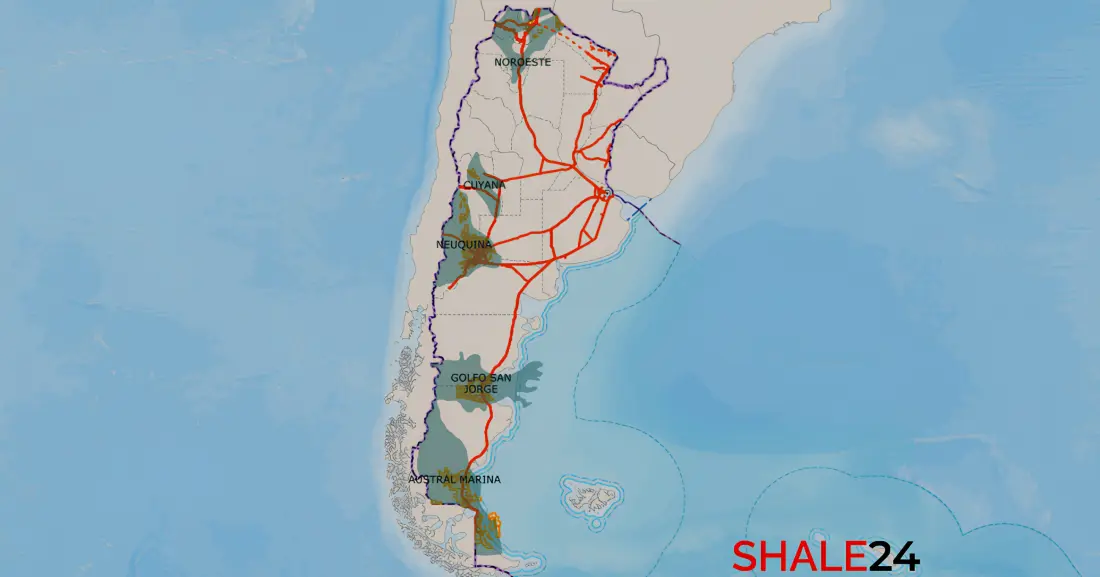
The rollout of the so-called Andes Plan by YPF, Argentina’s state-controlled oil and gas company, marks an unprecedented milestone in the history of the country’s hydrocarbons sector.
During 2025, the company divested approximately 55 mature areas grouped into 11 clusters across the provinces of Chubut, La Pampa, Mendoza, Neuquén, Río Negro, Salta, Santa Cruz and Tierra del Fuego. Historically, YPF operated a vast portfolio that included hundreds of mature fields whose declining productivity required rising operating costs, technically known as a sustained increase in lifting costs.
This is the first time the national oil company has carried out a restructuring of this scale. The Andes Plan is also a milestone because it redefines the relationship among the federal government, the provinces and the private sector, establishing a framework of collaboration in which priority is given to the productivity of natural resources rather than mere asset ownership.
This transition toward a model of productive specialization is what allowed other energy powers to revitalize their conventional basins while developing unconventional resources. Implementing this strategy would not only ensure the sustainability of the conventional oil industry in regions with decades of history, such as the Golfo San Jorge Basin, but would also allow YPF to consolidate itself as a modern energy company, internationally competitive and focused on the projects that will drive Argentina’s economy in the coming decades.
A phased process
The Andes Plan was rolled out in clearly defined stages, a methodology that allowed the market to absorb these assets in an orderly manner and enabled YPF to manage regulatory and commercial complexities with each of the provinces involved.
The first stage, officially launched in the first half of 2024 and consolidated by the end of that year, comprised a large package of about 30 conventional areas grouped into 11 strategic clusters. This initial phase focused primarily on the provinces of Neuquén, Río Negro, Mendoza and Chubut.
Among the most prominent assets in this first stage were the Mendoza Norte Cluster; the Neuquén Norte Cluster, which includes areas such as Señal Picada and Punta Barda; and emblematic blocks in the Golfo San Jorge Basin such as Escalante–El Trébol and Campamento Central–Cañadón Perdido.
The success of this first phase was overwhelming, attracting several companies and validating the thesis that there remains a robust market of independent operators eager to apply secondary and tertiary recovery techniques to capture the remaining value of these historic fields.
The second stage, launched in mid-2025 and currently in full operational execution, introduced an additional level of sophistication by incorporating more complex assets and leading recovery projects. This phase includes 16 additional blocks distributed across the provinces of Salta, known as the NOA Cluster, Mendoza and Chubut.
This stage included some of the “crown jewels” of conventional production, such as the Manantiales Behr block in Chubut, regionally recognized for its successful polymer injection projects, and the Chachahuen and Malargüe clusters in Mendoza.
By including the NOA Cluster at this stage, YPF aims for operators specialized in the logistics and geology of northern Argentina to take over fields that are critical to regional system stability, while the company concentrates its resources on the Vaca Muerta export hub.
Within the industry, questions remain about the fate of the remaining conventional areas that YPF still holds outside its unconventional strategic focus. The company has yet to make an official statement regarding a possible third stage.
This final stage could include remaining blocks across several basins and would allow deeper area reversions in provinces such as Santa Cruz and Tierra del Fuego, where the company is still working on collaboration schemes with provincial firms to ensure an orderly exit that does not affect employment or local production.
The new map, basin by basin
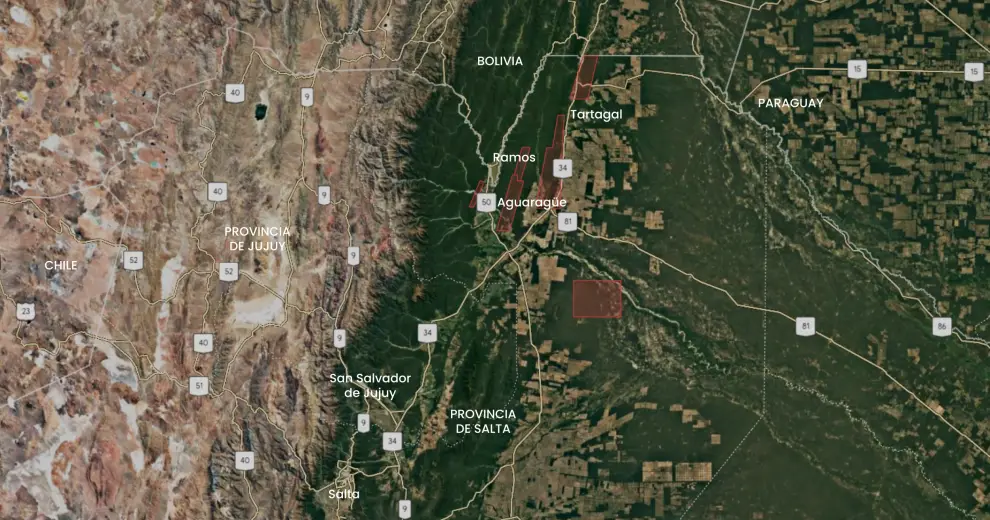
Traveling the country from north to south, the first focus is the NOA Cluster, located in the historic Northwest Basin around the city of Tartagal, in Salta province. There, YPF put on the negotiating table a set of highly significant gas assets that served as pillars of national supply for decades.
From a technical and financial perspective, the crown jewel of this cluster is the Aguaragüe block, historically one of the country’s major natural gas producers, exploiting deep reservoirs.
The main commercial value of these assets lies not only in their geology, but especially in the fully depreciated transportation and processing infrastructure that connects these fields to the main consumption centers of northern Argentina, as well as paved routes for exports to neighboring countries.
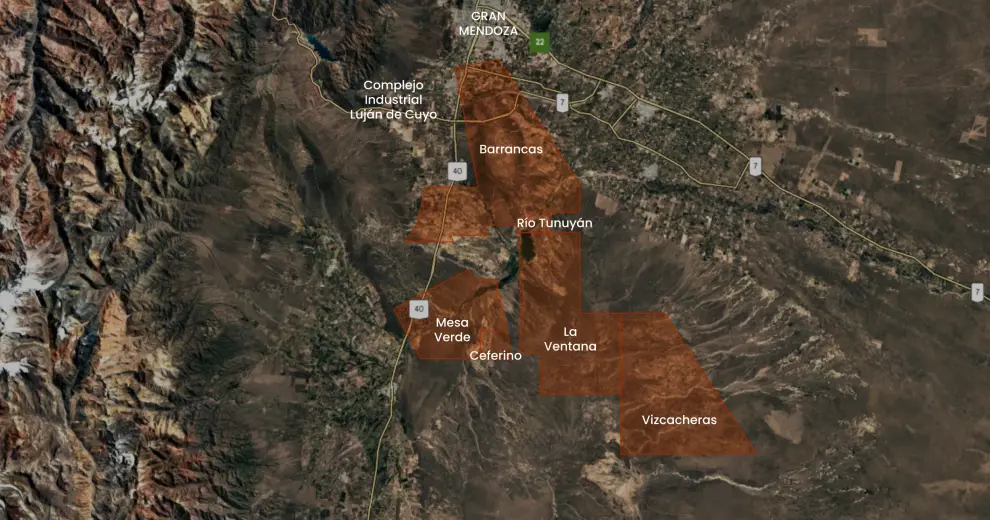
The second focus is the Cuyo Basin. At the heart of this region is the Mendoza Norte Cluster, a group of areas whose geology and logistical proximity to the Luján de Cuyo Industrial Complex give them intrinsic commercial value that independent operators could monetize quickly.
This cluster comprises the Barrancas, Vizcacheras, La Ventana, Mesa Verde, Ceferino and Río Tunuyán blocks. This asset package was awarded to Petróleos Sudamericanos following a government validation process that concluded in early 2025. The committed investment was $600 million.
These investments will allow the drilling of new wells, the reactivation of idle wells, workover operations and improvements to surface facilities, ensuring greater efficiency in resource exploitation.
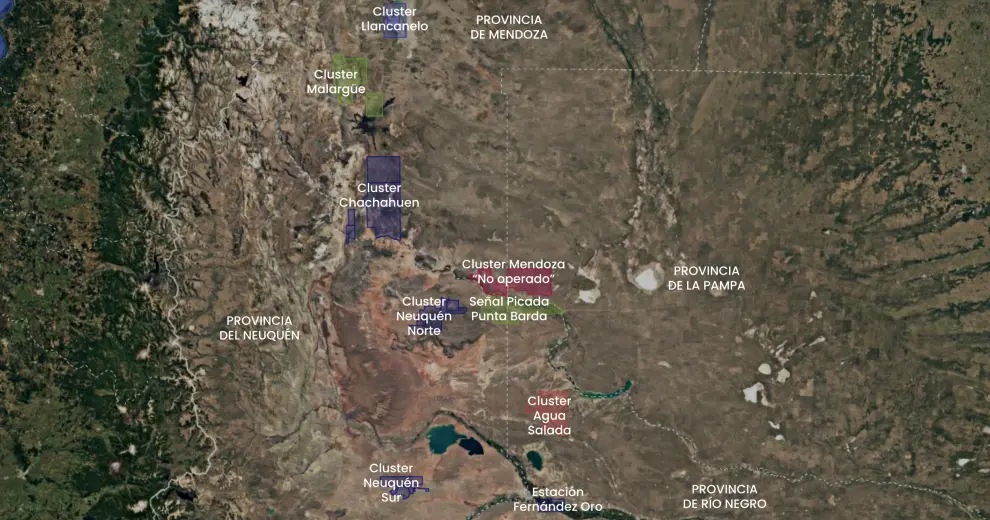
Within Mendoza province, the company consolidated its exit from the Mendoza Sur Cluster. This package of strategic assets was transferred to a consortium made up of Quintana Energy and services company TSB. Areas transferred in this block include Cañadón Amarillo, Altiplanicie del Payún, El Portón, Chihuido de la Salina, Chihuido de la Salina Sur and Confluencia Sur.
The Llancanelo and Llancanelo R areas were transferred to Petroquímica Comodoro Rivadavia. Bidding processes remain underway for the Malargüe Cluster, which includes the Cerro Fortunoso and Valle del Río Grande areas, and the “Mendoza No Operated” Cluster, which includes the CNQ 7 (Gobernador Ayala) and CNQ 7A blocks, located in the southwestern corner of La Pampa province.
In Neuquén province, YPF transferred some assets in the Neuquén Sur Cluster to Bentia Energy, specifically the Al Norte de la Dorsal, Octógono Fiscal and Dadin Norte areas, as well as four blocks in the Neuquén Norte Cluster: Señal Cerro Bayo, Volcán Auca Mahuida, Don Ruiz and Las Manadas. Bentia Energy will operate the latter jointly with Ingeniería Sima.
Shared with Río Negro province, the Señal Picada–Punta Barda area was awarded to Petróleos Sudamericanos, while Estación Fernández Oro is now operated by Quintana Energy. Near the town of Catriel lies the Agua Salada Cluster, which YPF operated jointly with Tecpetrol.
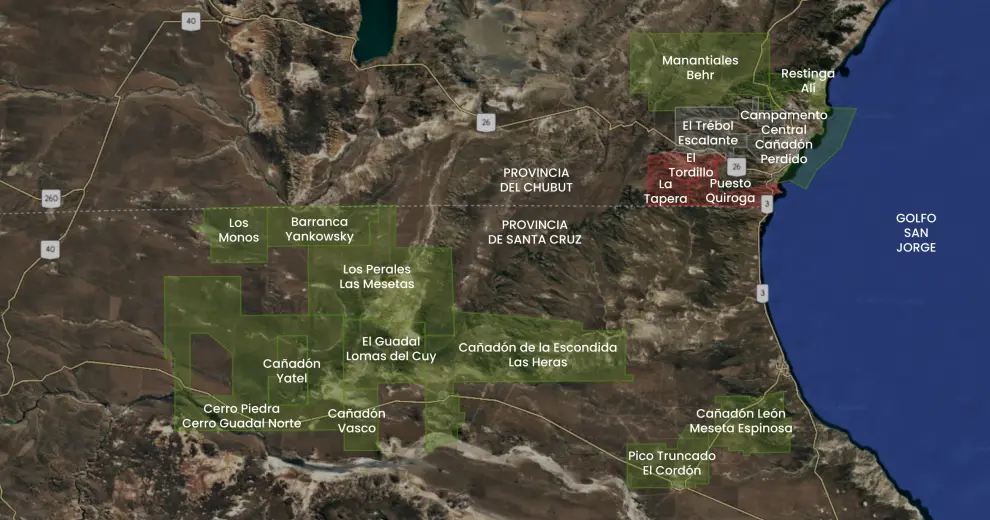
The most symbolic and operationally significant move under the Andes Plan took place in the Golfo San Jorge Basin, the historic enclave where Argentina’s oil industry was born in 1907. This region, characterized by rich geology and deeply rooted logistics infrastructure in cities such as Comodoro Rivadavia and Caleta Olivia, now offers commercial appeal centered on tertiary recovery through polymer injection, a technology in which these fields were global pioneers.
In Chubut province, the process was consolidated with the transfer of assets to PECOM, marking its return as an operator after more than two decades away from that role. The transferred areas include the historic El Trébol–Escalante Cluster and the 50% stake YPF held in Campamento Central–Cañadón Perdido.
Complementing this move in Chubut, other areas such as El Tordillo, La Tapera and Puesto Quiroga were awarded to Crown Point, while the coastal Restinga Alí block was reverted to provincial control for more localized management.
A major inflection point in the second stage of the Andes Plan was the inclusion of Manantiales Behr on the list of assets to be divested or tendered. This field is considered one of the world’s most efficient mature fields, where large-scale polymer application ultimately reversed natural decline, turning it into a highly profitable marginal asset for any top-tier independent operator seeking stable and predictable cash flow.
In Santa Cruz province, YPF reverted 10 areas to the provincial state firm Fomicruz, which then put them out to tender. The Los Perales and Los Monos blocks were awarded to Patagonia Resources, while Roch Proyectos took Cerro Guadal Norte and Cañadón Yatel.
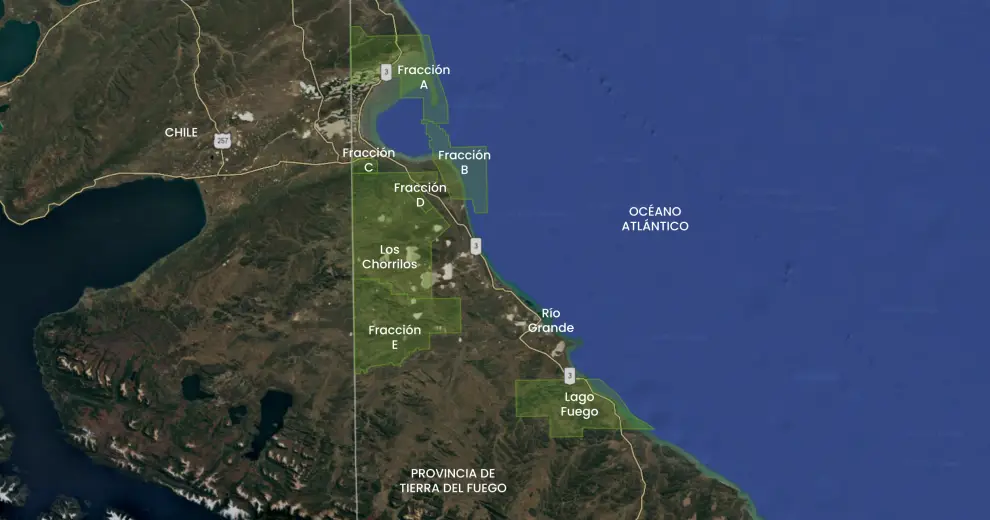
Regarding the Austral Basin, YPF transferred its northern island blocks to Terra Ignis, the provincial oil company, including Lago Fuego, Los Chorrillos and TDF Fractions A, B, C, D and E, under a memorandum of understanding signed in August. The provincial Legislature recently approved the transfer, which will take effect Jan. 1, 2026. Concessions were extended through at least 2036 and 2037, depending on the specific area.