
International financing signals shift in bilateral relationship
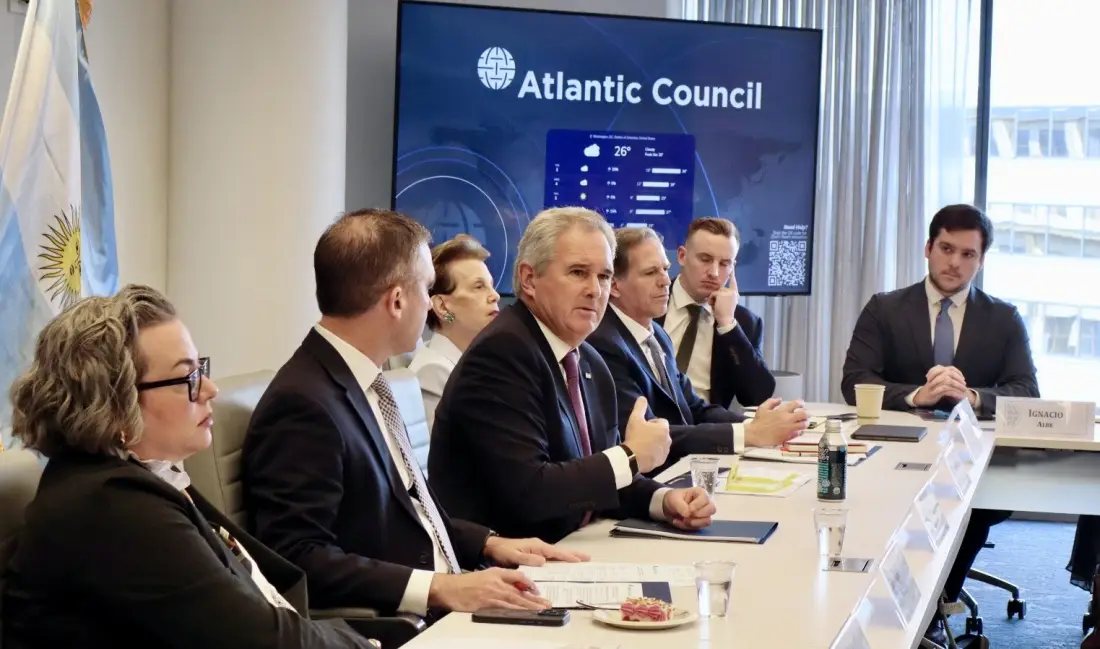
The Export-Import Bank of the United States (EXIM Bank) took a decisive step by updating its Country Limitation Schedule (CLS).
The change reverses years of restrictions and formally enables short-term credit (up to one year) and medium-term credit (one to seven years) for both Argentina’s public and private sectors. The news was first reported by Shale24.
The decision—replacing the December 2024 CLS—eliminates the need for case-by-case exceptions and allows U.S. exporters to offer competitive financing with deferred payments, improving conditions for bilateral transactions.
The measure is directly tied to the Reciprocal Trade and Investment Agreement (ARTI), signed Feb. 5, 2026, between Argentina and the United States. The pact, executed by Argentine Foreign Minister Pablo Quirno and U.S. Trade Representative Jamieson Greer, seeks to reduce tariff and non-tariff barriers, facilitate investment in strategic sectors and align standards in areas such as critical minerals, energy and economic security.
The reopening marks a true paradigm shift. For more than a decade—with brief exceptions—Argentina had been limited or excluded from these credit lines due to risk perceptions. The combination of sustained macroeconomic reforms since 2024, including a primary fiscal surplus, lower country risk and progress with the International Monetary Fund, together with the ARTI, created the confidence framework needed for this decision.
Quirno confirmed the development on his official account: “Today @EximBankUS reauthorized Argentina for short-term (up to one year) and medium-term (one to seven years) credits. This is also part of the Reciprocal Trade and Investment Agreement announced last week and will benefit U.S. companies investing in Argentina.”
Technical details of the CLS-02/26 update
According to the official EXIM Bank document, effective Feb. 3, 2026:
- Public sector → Up to one year: Yes | One to seven years: Yes | More than seven years: No
Private sector → Up to one year: Yes | One to seven years: Yes | More than seven years: No
The update enables several of the bank’s key financial products:
- Working capital guarantees
- Medium-term credit insurance (ESS and ELC)
- Buyer credits
- Direct loan guarantees
Sector impact: focus on Vaca Muerta, lithium and critical minerals
The authorization is particularly relevant for sectors of high bilateral strategic interest.
In Vaca Muerta—Argentina’s flagship shale formation—the measure facilitates the import of U.S. equipment, services and technology with financing of five to seven years, reducing capital costs for local operators and joint ventures. This could accelerate shale oil and shale gas development at a time of production growth.
Argentina, one of the world’s leading producers of lithium brine, gains access to dollar-denominated financing at competitive rates with risk coverage. This is critical for projects requiring U.S. partners and aligns with Washington’s strategy to diversify critical minerals supply chains away from China.
The reopening also enables deferred sales of heavy machinery, drilling technology and industrial equipment, strengthening energy and mining infrastructure projects.
The ARTI reinforces this framework by committing Argentina to facilitate U.S. investment in the exploration, extraction, refining and export of strategic resources under treatment no less favorable than that granted to domestic investors.
Geopolitical context: strategic alignment between Buenos Aires and Washington
The EXIM Bank decision comes amid clear strategic alignment between the two countries. The ARTI includes:
- Elimination or reduction of reciprocal tariffs on more than 1,675 tariff lines.
- Expanded quotas for Argentine beef (up to 100,000 metric tons annually at preferential tariff rates).
- Commitments on telecommunications security, export controls and investment reviews tied to national security risks.
- Explicit support for financing through EXIM and the U.S. International Development Finance Corporation (DFC) for projects in critical sectors.
- The move not only benefits U.S. exporters; it also lowers financing costs for Argentine projects and sends a strong signal of confidence in the economic direction pursued by President Javier Milei’s administration.
With the CLS updated and the ARTI expected to enter into force within 60 days following internal notifications, an increase in the deal pipeline is anticipated. Shale24 will closely monitor:
- The first concrete EXIM approvals for energy and mining projects.
- The impact on U.S. foreign direct investment flows into Vaca Muerta and the Lithium Triangle.
- The evolution of rates, credit exposure and financial conditions for Argentina.
The reopening is not a symbolic gesture: it is a real financial instrument with the potential to catalyze billions of dollars in investment and exports, strengthening bilateral economic integration amid global competition for strategic resources.