
Strategic Reconfiguration

The recent reshuffling of assets in Vaca Muerta, marked by a strategic swap between YPF and Pluspetrol, was far more than a routine administrative transaction.
With this move, the market confirmed that the swap was another step by YPF to consolidate control over the “sweet spots”—the most geologically productive zones—within the Neuquén Basin’s gas window.
By focusing on high-density gas areas, YPF is building the stable, large-scale supply base needed to make a megaproject like Argentina LNG financially viable.
For global energy majors such as ADNOC and Eni, certainty in upstream operations is a decisive factor for any capital-intensive investment. Consolidating assets with Pluspetrol ensures the pipeline feeding the liquefaction plants will rely on a coordinated, efficient flow rather than fragmented operators, drastically reducing supply risk—a critical requirement for multinational companies to commit fully to the consortium.
By demonstrating that it can extract gas with streamlined logistics, YPF is assuring majors that Argentina LNG can remain profitable even under low-price scenarios.
Operational efficiency is precisely what technical teams evaluate when considering long-term contracts, since stable wellhead costs underpin the financial architecture of projects of this scale. The signal is clear: YPF is clearing the operational path for international partners to enter a low-risk investment environment, free from technical or financial uncertainty.
For commitments worth billions of dollars, the local operator must show total control over the base resource. The speed and pragmatism with which YPF executed this swap with Pluspetrol sends a strong message to foreign investors, signaling both political and corporate will to transform the Neuquén Basin into a world-class natural gas source for Europe and Asia.
Integrating these blocks will enable much more precise gas capture planning, ensuring that when floating liquefaction units (FLNG) and onshore plants become operational, the gas flow is ready to monetize without technical bottlenecks.
An Integrated Value Chain
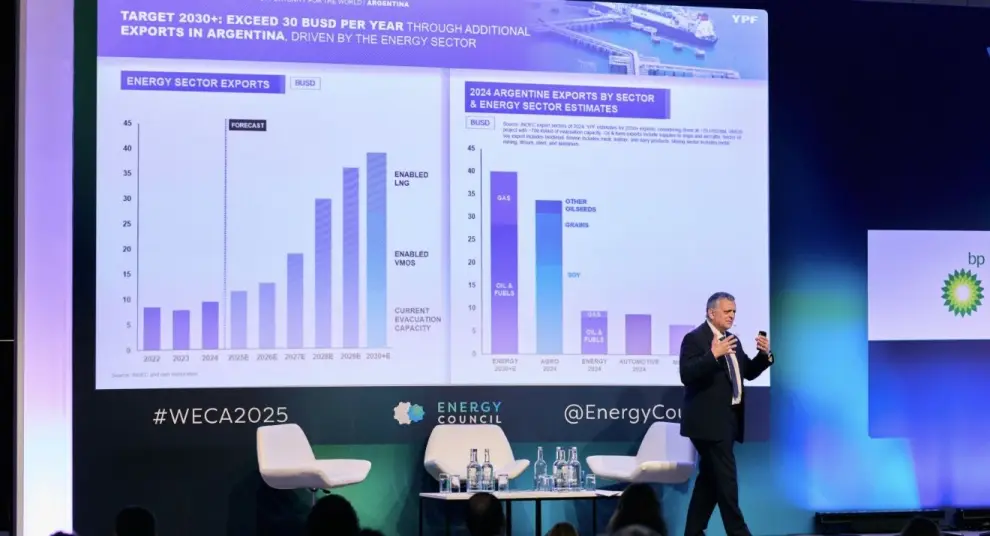
Argentina LNG aims to develop a fully integrated liquefied natural gas (LNG) production chain, starting with 12 million tons per year (MTPA) and expandable to 18 MTPA by 2030–2031. The chain covers upstream (gas production in Vaca Muerta), midstream (transport and processing), and downstream (liquefaction and export via FLNG units).
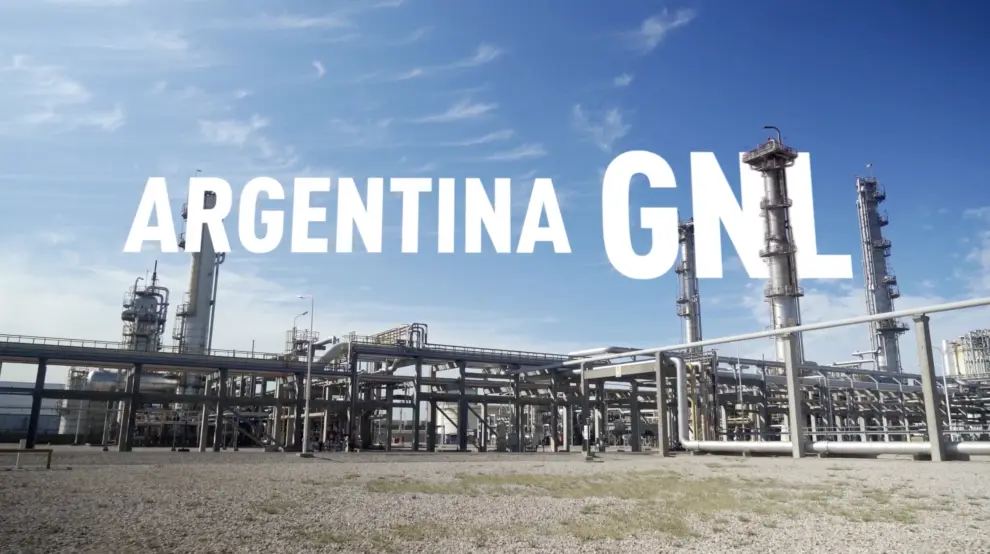
The main bottleneck remains securing a stable, abundant gas supply from Vaca Muerta, the world’s second-largest unconventional gas reserve.
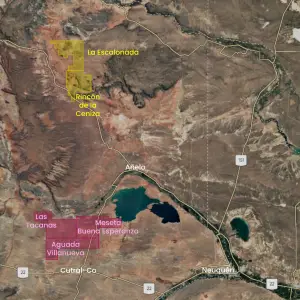
Under the agreement, YPF acquires Pluspetrol’s stakes in the Meseta Buena Esperanza, Aguada Villanueva, and Las Tacanas blocks. These areas are strategic because they are directly tied to the LNG supply chain, with potential to feed the liquefaction plants.
Before the swap, fragmented ownership could have complicated coordinated development. By taking full control, YPF accelerates exploration, drilling, and production, reducing both risk and timeline.
The move comes at a critical juncture, following preliminary agreements with international partners in November–December 2025, with a final investment decision (FID) expected by mid-2026.
This suggests YPF is “clearing the path” to attract financing, potentially through JP Morgan, which is seeking up to $16 billion, and move toward construction.
Both UAE’s ADNOC, through its international investment arm XRG, and Italy’s Eni signed nonbinding agreements with YPF in November 2025 to develop Argentina LNG. YPF’s acquisition of Pluspetrol’s blocks amplifies the value of these partnerships in several ways:
- Upstream Strength and Supply Security: The Meseta Buena Esperanza, Aguada Villanueva, and Las Tacanas blocks are rich in shale gas, ideal for LNG supply. With YPF in charge, gas flow to Sierra Grande Norte’s liquefaction facilities becomes more predictable. For ADNOC/XRG and Eni, this reduces supply risk and supports their investment rationale. ADNOC, experienced in global LNG operations such as Ruwais, sees this as portfolio diversification, while Eni contributes FLNG expertise. The swap improves the project’s “bankability,” easing the FID and attracting more financing.
- Impact on Partnership Structure:
- ADNOC/XRG: Reinforces its role as a strategic investor. With YPF controlling these areas, operational disputes are minimized, expediting negotiations toward a Joint Development Agreement (JDA) and potential LNG off-take commitments, positioning Argentina as a supplier for Asian and European markets.
- Eni: Already signed the final technical framework in October 2025 for two FLNG units of 6 MTPA each. YPF’s consolidation complements this by allowing Eni to optimize its midstream and downstream involvement, reducing exposure to local volatility and making the project more attractive for Eni’s global diversification strategy.
- Overall Risks and Opportunities: The move could attract additional partners, potentially replacing Shell, which exited in December 2025. Success depends on external factors such as global LNG prices and political stability. If the FID is confirmed mid-2026, the swap may be seen as the catalyst unlocking the project.
In short, the swap is more than a corporate transaction—it signals that YPF is consolidating resources to make Argentina LNG viable, overcoming historical obstacles tied to the basin’s fragmented operator landscape.