
International Women’s Day

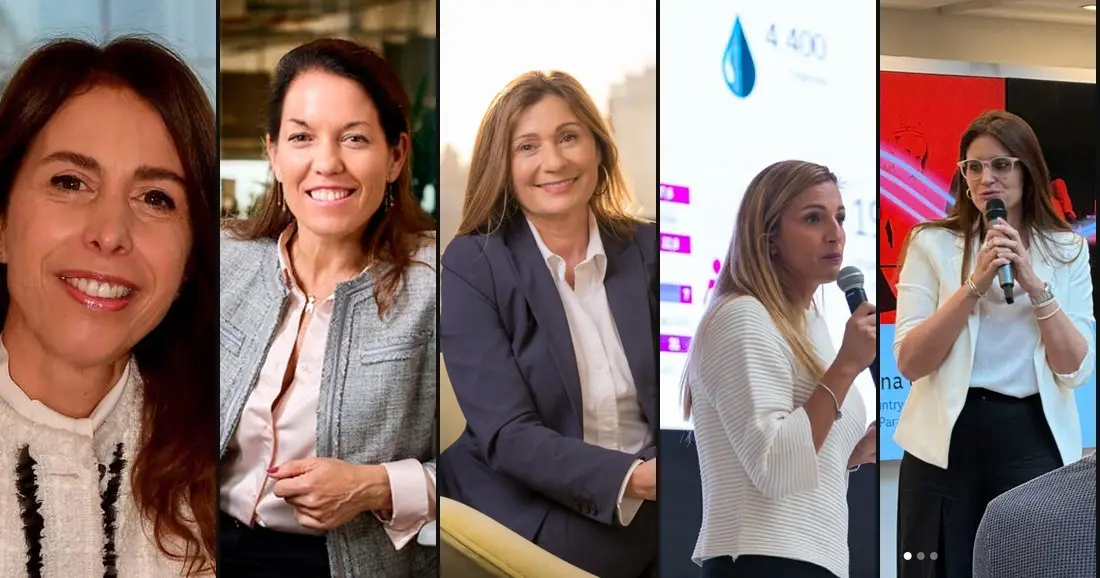
One statistic sums it up: in Argentina’s oil and gas sector, eight out of 10 workers are men.
In mining, the imbalance is even more pronounced. Globally, according to the International Energy Agency (IEA), women make up just 20% of the energy workforce, compared with 39% across the wider economy. The gender gap in energy is nearly twice as large as in the global economy overall.
This March 8 finds the country’s two most dynamic extractive industries in an unprecedented growth phase. Vaca Muerta continues to consolidate as a strategic export asset, with projected demand for 180,000 to 240,000 jobs by 2040. Meanwhile, Argentine mining has accumulated more than $47 billion in projects under the Large Investment Incentive Regime (RIGI) — covering lithium, copper, and gold — with a portfolio of more than 65 initiatives at various stages of development. Both sectors are booming, yet remain predominantly male. The question is how much of that growth will reach women.
The numbers: real progress, persistent ceilings
In Argentina’s hydrocarbons sector, female participation reached 19.9% in 2025, according to the second report from the Diversity, Equity and Inclusion (DEI) Commission of the Argentine Institute of Petroleum and Gas (IAPG), prepared with consulting firm Mercer. That was up from 18.1% in 2022. In absolute terms, roughly 4,500 women joined the sector in three years — a real gain, though still insufficient.
Fresh data points to further progress. A new IAPG survey, involving more than 30 companies, shows women now represent 22% of the sector’s workforce. Evangelina Cordero, a chemical engineer and DEI Commission leader for IAPG’s Comahue branch, shared the update with Shale24:
“Women now represent 22% of the total workforce, a nearly four-percentage-point increase from 2022. We’re also seeing positive movement in leadership: women hold 21% of managerial positions and 16% of executive roles.”
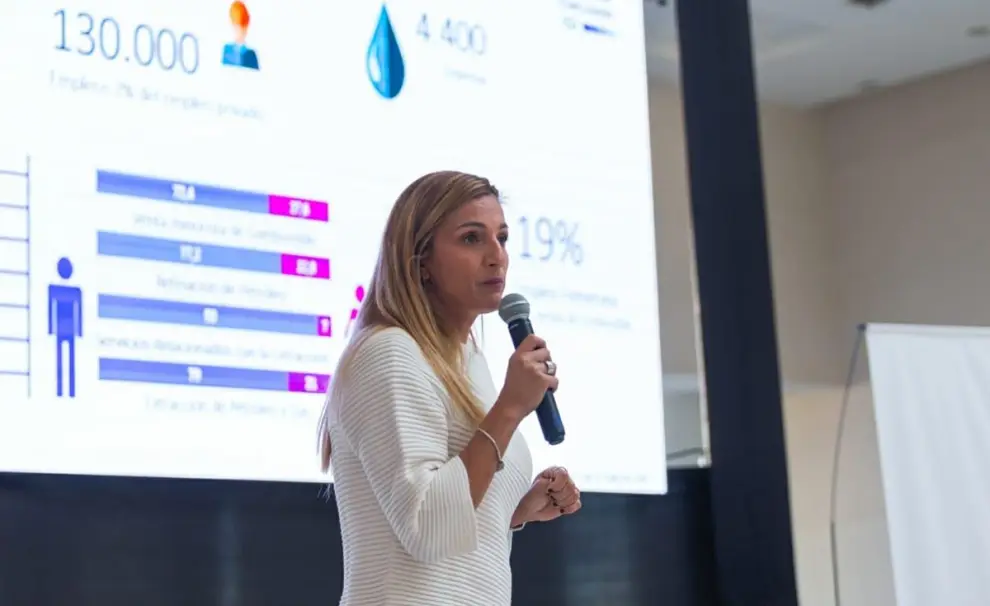
In mining, the picture is different but equally revealing. Data from the National Mining Secretariat for January 2025 shows 4,991 women employed in the sector out of 39,395 formal jobs — 12.7%. The historical leap is significant: in 2020, when Women in Mining (WIM) Argentina was consolidating, female participation was just 5%. In four years, it more than doubled. In lithium exploration and financing — one of RIGI’s fastest-growing areas — women account for 22.6% of the workforce, the highest proportion across all mining subsectors, indicating newer sectors tend to be more open to inclusion.
Globally, contrasts are stark. Renewable energy registers the highest female participation in the energy sector: 32% of full-time positions, according to IRENA’s October 2025 report. That figure has not changed since 2019, underscoring that sector growth does not automatically translate into inclusion. Solar energy approaches 40% female participation — nearly double the rate in oil and gas — highlighting a structural difference between energy transition industries and fossil fuels.
The gap that doesn’t show up on the org chart
Averages conceal uneven distribution. Cordero notes women are well represented in human resources, legal, or marketing roles, but their presence drops below 10% in operational areas such as drilling, completions, and logistics. Concentration in support functions, coupled with scarcity in technical and operational core roles, limits access to senior positions, since leadership paths in this industry run through field experience.
“A persistent challenge is the uneven distribution of female participation by function. In operational areas — drilling and completions — female presence is below 10%, whereas corporate functions approach parity,” Cordero explained.
The IAPG-Mercer report also highlights a rarely discussed anomaly: the average age of women in oil and gas is 44, eight years younger than male colleagues at 52. The age gap — larger than in other sectors — suggests women are not staying in the industry at the same rate. The issue is not just entry; it’s retention.
For Cordero, the most significant change is not only numerical but also cultural: the formalization of a diversity agenda that until recently was informal or nonexistent.
“More and more companies are implementing diversity policies, inclusion programs, and gender-focused professional development. The diversity agenda is now more mature, established, and formalized within the industry,” she said.
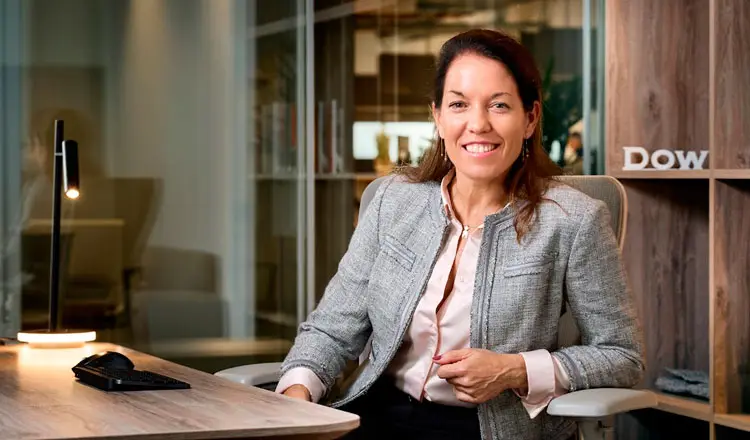
Dolores Brizuela, president of Dow Argentina and Southern Latin America, frames the issue in a broader context. In an industry undergoing deep transformations — geopolitics, energy transition, and pressure on business models — diversity is not optional; it is essential.
“For a long time, petrochemicals was a male-dominated sector. Today, we know diverse teams make better decisions, especially in uncertain and changing contexts. Women bring leadership that combines strategic vision with listening skills, consensus-building, and long-term thinking,” Brizuela said.
The change is already visible on the plant floor. Brizuela, who has spent more than two decades at Dow, confirms it with her own data:
“Today I believe women are ready for any challenge. Twenty years ago there were very few female engineers, and today they outnumber the men in our plant. They have earned their place through tangible results, just like anyone developing their career,” she said.
At the same forum, the executive summed up the distinctive contribution of female leadership in one sentence: “Female leadership fosters trust, cooperation, and the pursuit of solutions together.”
She added: “The contribution of women is not just about occupying leadership positions, but about broadening the way we think about the industry: promoting more dialogue, greater collaboration, and a more holistic view of the impact of our decisions.”
Vaca Muerta and RIGI: largest employment opportunity in decades
The development of Vaca Muerta and the mining expansion under the Large Investment Incentive Regime (RIGI) present an unprecedented opportunity to redefine the composition of both sectors. In hydrocarbons, IAPG’s Planning and Economic Analysis Commission projects 180,000 to 240,000 direct and indirect jobs from 2025 to 2040, with a peak of 30,000 to 43,000 direct jobs in a single year. Mining projects under RIGI total over $47 billion, including lithium in northwest Argentina (NOA), copper in San Juan, and gold in Santa Cruz. If projects proceed as planned, the sector could reach 200,000 direct and indirect jobs by 2032, according to WIM Argentina estimates.
These figures force consideration of a massive influx of talent. The question is whether that influx will replicate historical biases or create a break from them.
Gabriela Aguilar, president of the Argentina-Texas Chamber of Commerce and head of IAPG’s DEI Commission, framed the challenge: in the next five to six years, the industry will need around 30,000 new direct jobs, multiplying sixfold in indirect employment.
“Diversity, equity, and inclusion are fundamental to fully developing Vaca Muerta’s resources. We want there to be no biases in job applications,” Aguilar said during the presentation of the IAPG-Mercer report.

Aguilar also pointed out a specific cultural gap: women have historically not developed the networking connections that in this industry act as a lever for access and career advancement. Informal spaces —like rugby matches and the post-game social gatherings known as the “third half”— remain male-dominated, with concrete consequences for who gains access to information and opportunities.
“Women don’t know how to network. Men start doing it from a young age. We need to understand the value of networking because when we connect, we can understand what is happening to us, what is happening to others, and that perhaps they are experiencing the same thing,” she said at the launch of the Women in the Energy Industry Network.
Along the same lines, Aguilar had already noted that addressing the shortage of women in technical and operational roles begins long before the first job interview:
“We need to start with technical positions by incorporating more women, because if there are more at the base, there will also be more able to reach senior roles. It is important to work with universities and secondary education to encourage women to pursue technical careers,” she told industry leaders.
Concrete policies and measurable impact
One of the clearest recent changes is the formalization of gender agendas within companies. The IAPG-Mercer report shows that half of the companies in the sector now have an equity policy, and four out of 10 have created a diversity committee. These are not extraordinary figures, but they mark a turning point in an industry that until recently treated the issue as marginal.
At ABB, Giselle Somale, country holding officer for Argentina, Uruguay and Paraguay, offers the perspective of a company operating at the core of energy and industrial infrastructure. Women make up 22% of ABB Argentina’s workforce, and at the Tucumán plant — where low- and medium-voltage equipment is manufactured for export — 30% of operators are women, well above the average for Argentina’s industrial sector.
“The best teams are those that integrate diverse perspectives and turn them into a competitive advantage. This isn’t theoretical — it’s something I see every day reflected in tangible results,” Somale said.
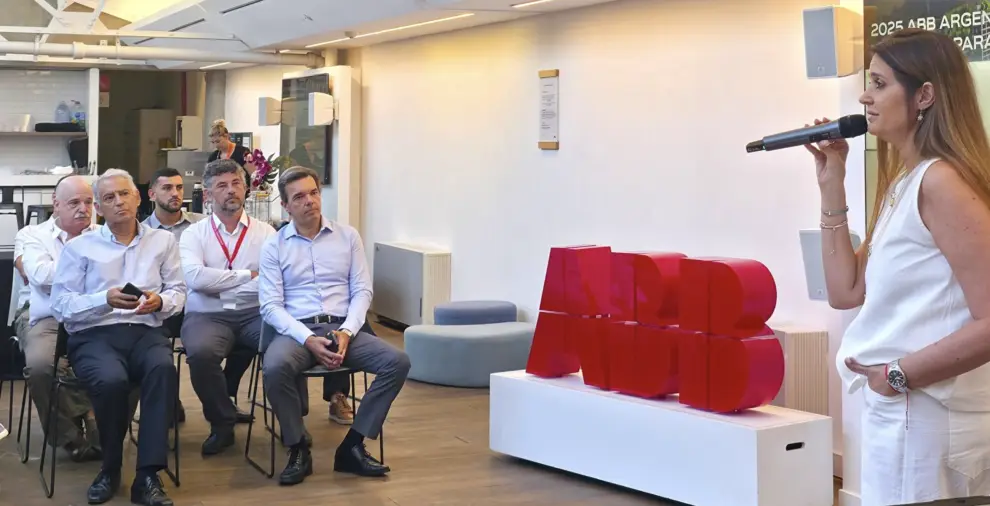
Globally, ABB reported in 2025 that 34% of its new hires were women and that 28% of participants in leadership development programs were women. The company aims to reach 25% women in leadership positions by 2030; today that figure stands at 22.6%. Somale stresses that the case for diversity goes beyond social equity and becomes a measurable competitive advantage:
“The energy transition, the digitalization of industrial processes and the decarbonization of operations require innovative solutions. And innovation does not emerge from homogeneous teams that think the same way,” she said.
In that context, Somale is clear that diversity on the plant floor is not accidental but the result of deliberate management decisions:
“When decision-making tables include engineers with field experience, technicians with decades navigating volatile markets, and professionals from different generations and cultural backgrounds, blind spots shrink, solutions become more robust and risk anticipation becomes more effective.”
Talent as the benchmark: beyond the representation debate
María Eugenia Sampalione, country director of Newmont’s Newmont Cerro Negro — Argentina’s largest gold operation, with annual exports of between $400 million and $600 million and more than 1,400 direct employees — proposes a shift in the focus of the debate. She does not reject the discussion around representation, but places it under what she considers a more fundamental issue: building organizations where talent is the decisive criterion.
“The discussion that really matters is not how many women sit at a decision-making table, but how many people with talent, preparation and character are capable of leading projects that require vision and responsibility. It is not an ideological debate. It is, quite simply, a matter of competitiveness,” Sampalione said.
Newmont recently announced an investment of nearly $800 million for the Cerro Negro Expansion 1 (CNE1) project in Santa Cruz, with a six-year horizon and more than 30 surface and underground works. The project will generate 270 new positions during the execution phase, with a focus on local talent. In that context, Sampalione acknowledges the specific contribution of women without turning it into a banner issue:
“More and more women are transforming the spaces in which they participate. They are not doing it by asking permission, but by bringing conviction, strategic intelligence and an ability to listen that often enriches the way decisions are made. That more integrative perspective strengthens teams and helps build stronger organizations,” she said.

Sampalione also argues that leadership in industries such as mining or energy carries responsibilities that go beyond internal metrics:
“Running an energy or mining company means making decisions that affect thousands of people, regional economies and the generation of foreign currency for the country. When talent finds the space to fully develop, not only do people grow — companies and the communities around them grow as well,” she concluded.
The pending agenda: not only entering, but staying and advancing
The Argentine Institute of Petroleum and Gas plans to publish in the coming months the full results of its new gender and diversity survey — the first since 2022 — with data from the largest companies in the sector by workforce size. Evangelina Cordero, who coordinated part of the process, anticipates that the numbers confirm a positive trend but also a structural gap at decision-making levels.
“Although female participation has grown, a gap still exists at decision-making levels. In management and executive positions there was a three-percentage-point increase compared with 2022, but it remains a minority share. That is the challenge: equalizing the percentages,” she warned.
In this context, the Argentine Institute of Petroleum and Gas is working through its Women’s Network and with organizations such as Vital Voices Global Partnership to build a pipeline of female talent that not only enters the sector but has the conditions to develop within it. The new survey, scheduled for publication in 2026, will arrive at a key moment — when the industry is recruiting at scale, in both hydrocarbons and mining — and when decisions about whom to hire will have long-term effects.
Dolores Brizuela summed it up with the precision of someone who has spent years inside the system:
“In an industry and a country that is redefining its future, we need every possible perspective to do the best for everyone.”
The numbers still tell a different story. But the distance between what is declared and what is measured is narrowing, and the next survey by the Argentine Institute of Petroleum and Gas will confirm it — or not — with data.