
The global geopolitical map is shifting

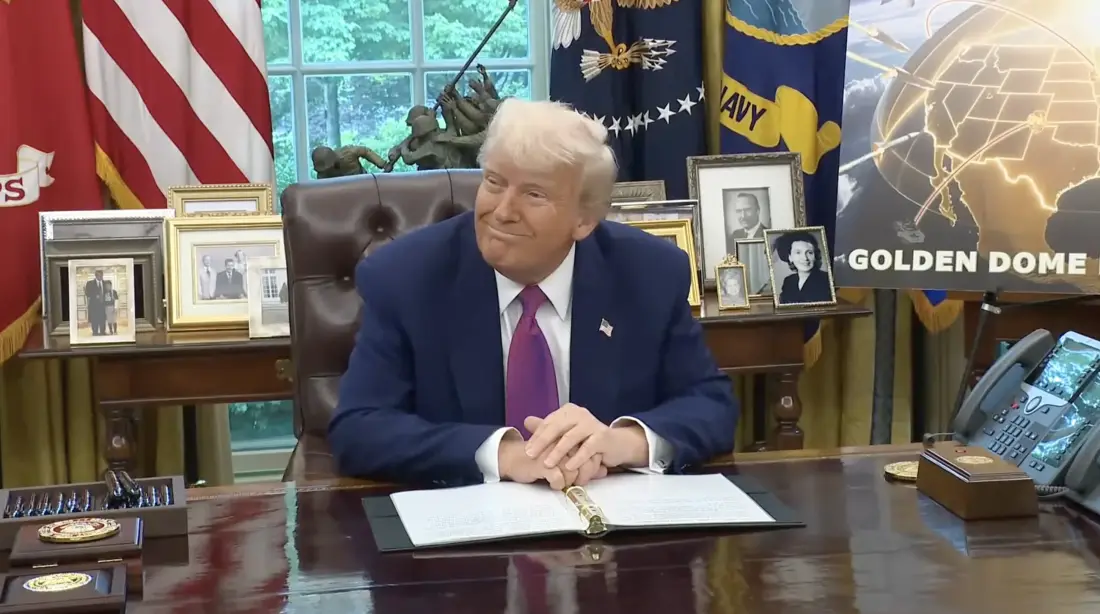
The United States’ new National Security Strategy has recently become public, a document that marks a definitive break with policies of recent decades.
Far from traditional diplomatic rhetoric, the text signed by President Donald Trump sets out a clear roadmap: “America First” is not just a slogan, but rises as the new official doctrine to ensure the United States remains “the world’s strongest, richest, most powerful, and most successful country for decades to come.”
The new strategy prioritizes “energy dominance” above all. The document explicitly rejects what it calls the “disastrous” ideologies of climate change and “Net Zero,” arguing that these policies ended up favoring adversaries and weakening the West.
If Argentina chooses to align itself under this new hemispheric security umbrella, Vaca Muerta could be transformed into much more than a profitable hydrocarbon play; it would become a regional security asset.
Instead, Washington seeks to restore its preeminence in oil, gas and nuclear energy as a top strategic priority. The plan also revives the Monroe Doctrine under a new “Trump Corollary,” aimed at challenging foreign powers, specifically China, for control over strategic assets in the Western Hemisphere.
Vaca Muerta and the “golden ticket” in the new energy era
For Argentina, and specifically for the development of Vaca Muerta, this paradigm shift in the North represents a challenge. The new U.S. strategy no longer seeks simple international “aid,” but rather to integrate allies into a more robust supply chain that excludes rivals.
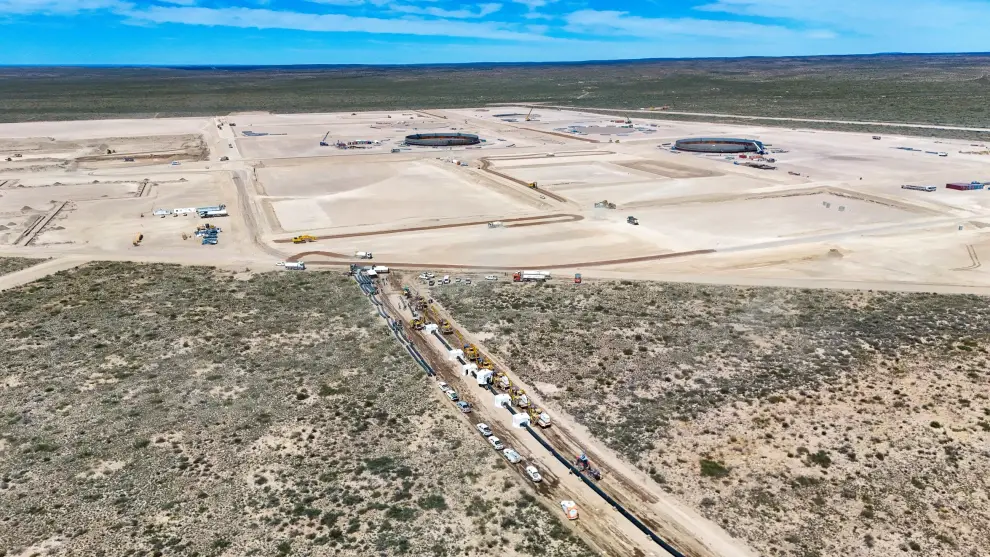
If Argentina decides to align with this new hemispheric security framework, Vaca Muerta could become far more than a profitable field; it would be elevated to the status of a regional security asset. The strategy details a precise mechanism for how this benefit would operate:
- Direct financing for critical infrastructure: The main bottleneck for Vaca Muerta has always been “heavy” infrastructure, including roads, pipelines and liquefaction plants. The new strategy instructs the U.S. government to identify these “strategic points” and resources in the hemisphere for joint development. More importantly, it authorizes financial agencies such as the U.S. International Development Finance Corporation and the Export-Import Bank of the United States to finance the purchase of goods and services needed. The explicit goal is to build “scalable and resilient energy infrastructure.” This same approach applies to access to critical minerals such as lithium, copper, gold and silver.
- Cutting-edge export technology: The document addresses not only extraction, but also commercialization. Washington views the development of Liquefied Natural Gas (LNG) and Liquefied Petroleum Gas (LPG) technologies as a pathway to generate profits for U.S. companies and their partners. If aligned with this new strategy, Argentina could more easily access the technology required to liquefy and export its gas at a global scale, displacing other potential suppliers considered “hostile to Western interests.”
- End of environmental barriers: By declaring the end of the “Net Zero” era and prioritizing cheap and abundant energy, diplomatic pressures that previously hindered financing for fossil fuel projects would fade. For Washington, a partner that produces gas and oil is no longer viewed as an environmental problem, but as a geopolitical solution for price stability and energy security.
However, this flow of capital and technology would not be “free.” The White House strategy is transactional and explicit: it seeks to “enlist” partners and “expand” U.S. influence.
The document warns that the United States will work to “push out” foreign companies building infrastructure in the region and will condition its alliances on reducing adversarial influence in ports and strategic facilities.