
Middle East tensions rise
While allied forces — the United States and Israel — maintain military superiority, the international debate is increasingly focused on long-term strategic objectives.
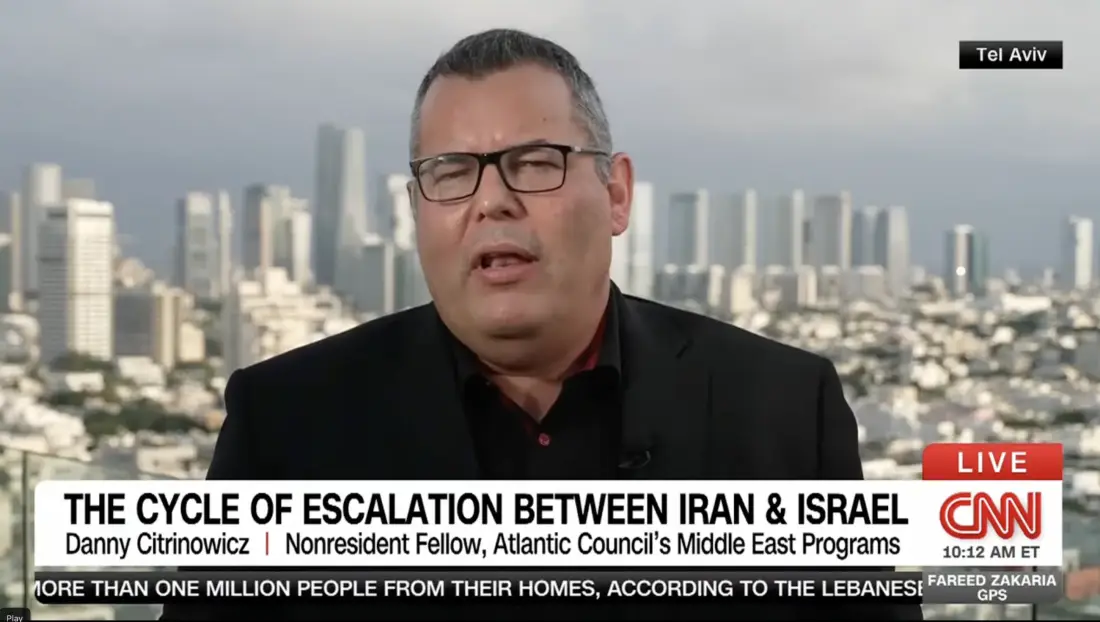
In this context, analyst Danny Citrinowicz, an expert on the Middle East, national security and intelligence, and a senior fellow at the Institute for National Security Studies and the Atlantic Council, offers a critical assessment of the challenges facing the administration of Donald Trump.
In a recent post on the social media platform X, Citrinowicz warns of the structural limitations of the current strategy and points to a key diagnostic error: a profound misunderstanding of Iran’s strategic doctrine.
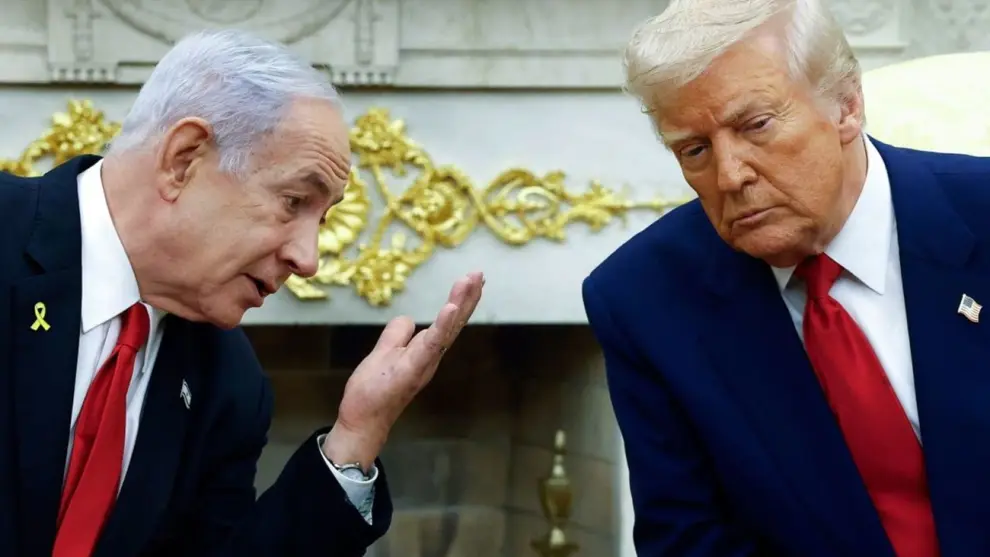
Below is his analysis, responding to remarks by Steve Witkoff, the U.S. special envoy for peace missions, regarding failed negotiations with Tehran:
"The Trump administration is approaching a decision point in the war — and it is not an optimal one from its perspective.
The core problem was never just the technical gaps between Washington and Tehran over the nuclear file. It was a deeper misunderstanding — a flawed assessment of Iran’s strategic doctrine and red lines — that contributed to the collapse of the negotiations in the first place.
That same misreading now carries into the war itself. Iran is unlikely to capitulate under military pressure. It will not relinquish its missile arsenal, nor will it forgo what it defines as its right to enrich uranium.
Yes, the U.S. and Israel hold overwhelming military superiority. But if the objective is to truly compel Iran to surrender on these core issues, that would likely require regime change. And if regime change is not the goal, then the alternative is an agreement with the very same regime — one that, once the fighting subsides, will move quickly to rebuild its capabilities.
In other words, the administration has entered a campaign where the only clear path to decisive victory is regime change — and it is far from clear that Washington is willing to invest the resources and long-term commitment such an outcome would demand.
No internal shift within the regime — and no successor to Khamenei — is likely to present surrender terms to the United States.

From Tehran’s perspective, capitulation would mean the collapse of the very ideological foundation of the Islamic Republic. Any leader who emerges from within the system will be bound by the same core principles and strategic red lines.
They are far more likely to continue fighting than to formally concede. Their assessment, rightly or wrongly, is that time is on their side — that external pressure ebbs, political cycles shift in Washington, and regional dynamics evolve.
If that is the case, expectations of a quick political submission from Tehran are detached from how the regime understands survival."
Tactical superiority vs. strategic outcome
Citrinowicz’s reading highlights the gap between tactical military superiority and long-term political viability. Without a clear definition of the end goal — containment, negotiation or regime change — the risk is entering a prolonged conflict in which each ceasefire merely allows Iran to reconfigure its power.
The analyst warns that without a structural approach to the nature of the regime, any temporary halt in hostilities could perpetuate the cycle of confrontation.
Impact on the oil market
The military escalation has already had direct effects on international energy markets.
Since the launch of “Operation Epic Fury,” Brent crude prices have risen for three consecutive sessions, reaching peaks of $82.37 per barrel and posting cumulative gains of between 6% and 9%. On Tuesday, Brent was trading in the $80 to $81 range.
Meanwhile, West Texas Intermediate, the U.S. benchmark, moved above $73 per barrel, with gains of between 6% and 8% in recent days.
The Strait of Hormuz factor
The main trigger was the effective or partial closure of the Strait of Hormuz, a critical chokepoint through which roughly 20% of the world’s oil supply passes, along with significant volumes of liquefied natural gas.
Iranian threats against oil tankers, insurance coverage cancellations and attacks on energy infrastructure in Gulf countries created an immediate geopolitical risk premium. Maritime traffic fell sharply, pushing up freight rates and risk premiums.
Although no massive structural damage was reported at major facilities in Saudi Arabia or Iraq, the market quickly priced in the risk of prolonged supply disruptions.
Analysts project that if the crisis deepens, Brent could surpass $90 to $100 per barrel. However, a potential output increase by OPEC+ could temper the rally.
Implications for Argentina and Vaca Muerta
From an economic and energy perspective, particularly relevant for Argentina, the conflict could reshape global oil and gas markets.
Iran is a significant producer, and any disruption supports higher international prices. For alternative exporters such as Argentina, particularly through development at Vaca Muerta, this could translate into higher crude and gas export revenues.
However, potential benefits coexist with a scenario of heightened volatility, global inflationary pressures and supply chain tensions. In the context of the energy transition, geopolitical uncertainty adds another layer of complexity.
An open-ended conflict
As “Operation Epic Fury” advances, Citrinowicz’s analysis invites a reassessment of what constitutes a sustainable victory. The key, he argues, is aligning military means with realistic political objectives and avoiding assumptions of rapid capitulation by a regime whose identity is anchored in ideological resistance.
At the same time, energy markets are already absorbing a supply shock reflected in higher prices and greater global uncertainty. The outcome appears to hinge more on political decisions than on purely military dynamics, and those decisions remain far from fully defined.